Saturday, October 8, 2011

Amsterdam

Amsterdam, The Netherlands
Latitude 52° 21' 0" N
September 22, 2011

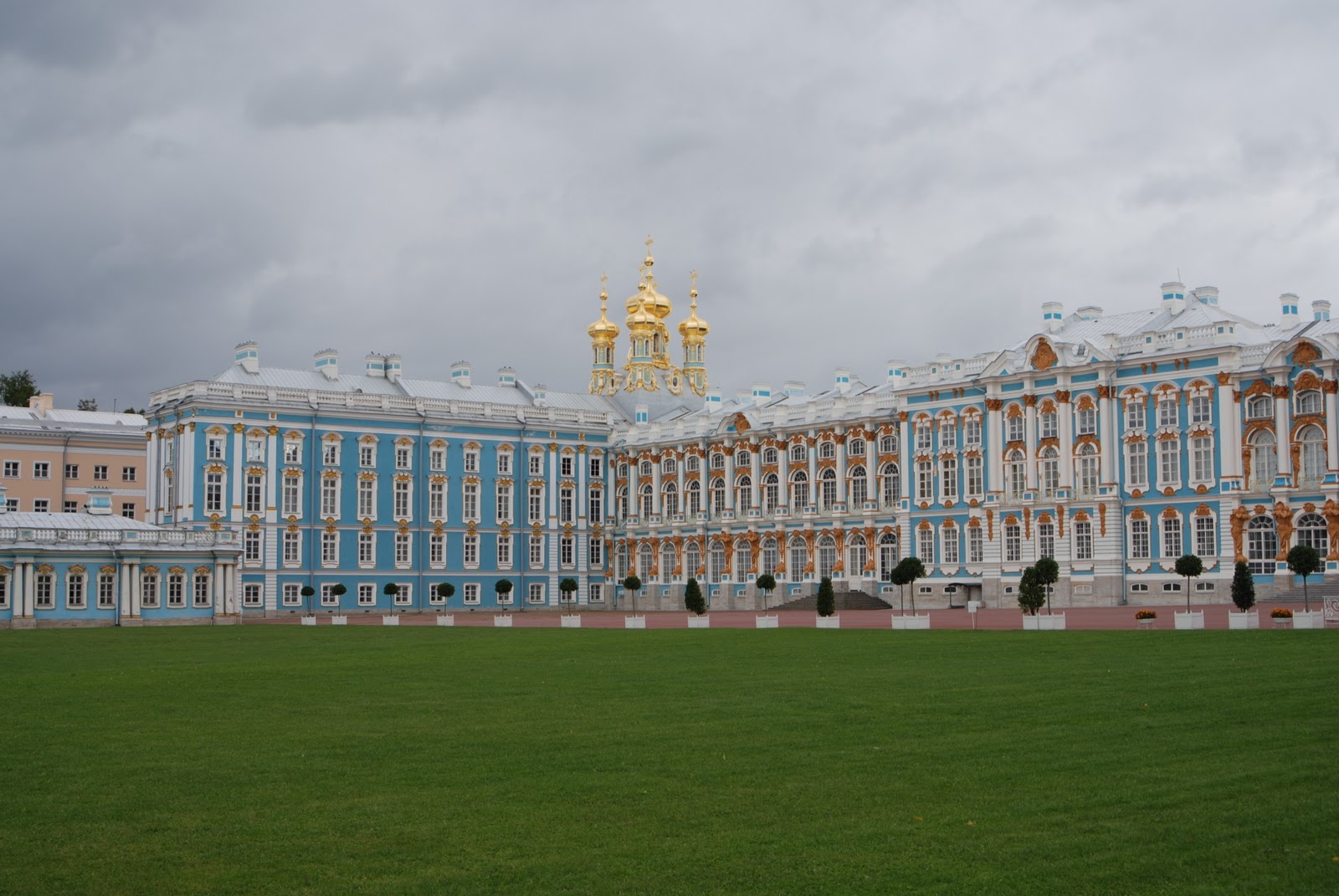
Some days are just better than others and today is a good example. Way back in March or April, I was Skyping with my long time Dutch friend, Lomme Schokker. I let him know that we would be in The Netherlands on a cruise and that it would be great to connect with him, even if it were for just a day. For months this date has been penciled on the calendar. He’d meet us, he said, at the disembarkation point at 8:00 a.m. We exited the boat, walked into the port, and Lomme was waiting for us—our tour guide for the day. For me, it had been exactly 13 years to the week that I’d last seen him.

I first met Lomme and his then wife, Susan, in the early spring of 1981. Steve had just left for a year in Turkey. His Air Force friends who stayed in Plattsburgh were good to me, but it was nice to meet new, non-military, people.

Lomme was Dutch; Susan was from New York City. They were high school penpals who finally met, married and moved to the United States to study. They were at SUNY Plattsburgh for a few years—Susan to pick up her undergraduate degree and Lomme to get a Master’s.

By the Fall of 1981 I was integrated into their lives. Susan would call me up, ask me to come over to listen to a paper she was writing. “How does this sound?” she’d ask. She was never content with a pat answer and demanded my expertise as an English teacher to write the best she could.

I loved their apartment and it brought me back to my undergraduate years at SUNY Fredonia, and the life of a full time student. How nice it was to be part of that and to be part of their lives.

That Christmas, Lomme hosted his first St. Nicholas Party. He’d written poems for each of his guests as was the custom in The Netherlands. None of his guests knew what to do. His American friends just exchanged gifts. His anual St. Nicholas party was a tradition all of us looked forward to.

Over time, their friends became mine. It’s through them that I met Mary Centofani, now almost my sister in depth of friendship.

In the Spring of 1982 Steve was restationed to Plattsburgh Air Force Base—his year in Turkey over. He became their friend as well.

They finally graduated. Lomme ultimately moved to New Jersey to work at Rutgers, Susan to Montreal. And then Lomme, solo, back to The Netherlands. We visited him in 1986 where we met Ina, who would become his wife on Christmas Eve 1988.

Over the years we have seen each other intermittently and through all that time our friendship has endured the years. What a beautiful and precious gift that is.

And so it was that we had another reunion, albeit too short, in Amsterdam on the last full day of summer, September 22, 2011.

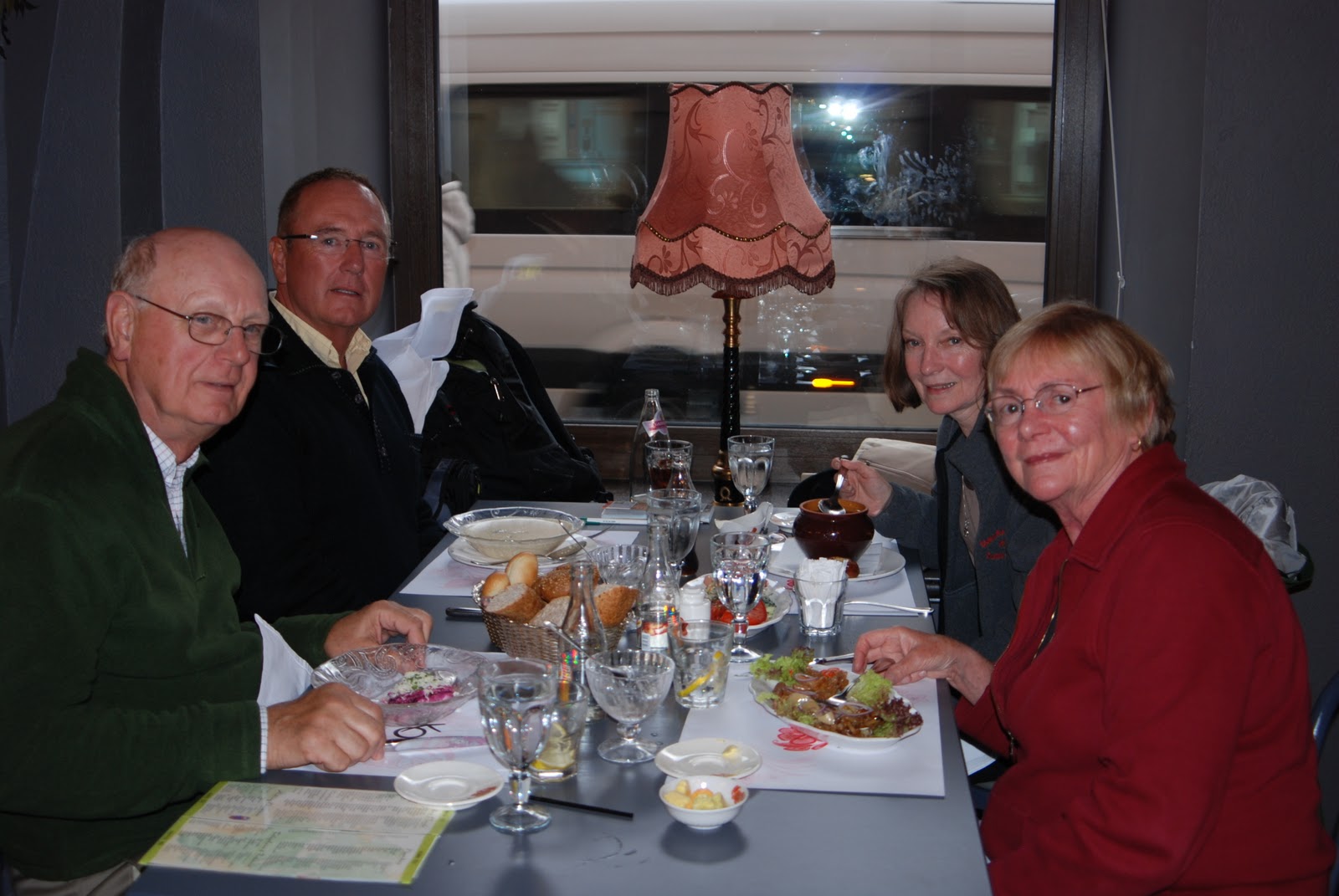
He had a battery of things for us to do. Glenda wanted to visit Rembrant’s house which gave Lomme and I a chance to catch up. We were content just to walk the magnificent streets of the Dutch capital, walking up and down canals, taking pictures from its bridges, lunching outrside in the warm, languid sunshine of the last day of summer. In the afternoon we took a one hour canal ride, enjoying wáter views of homes built before the Pilgrims arrived in the New World.

But our vist was too short. The Sun would wait for no one and, sadly, we returned to the ship. How nice it would have been to have more time with Lomme, to visit with Ina and their two children. Another time.

Promptly at 5:00 p.m. we sailed out of Amsterdam’s downtown harbor.

“Goodbye, Lomme,” I shouted into the wind.

“Thank you, dear friend—for a wonderful day and for a wonderful, thirty year friendship.”

There was an air of excitement for those on the 14th floor foredeck. We braced ourselves against the biting cold as the ship sailed past center city, into the industrial area of Amsterdam and then past flat, neaty manicured Dutch farmland—square fields dotted with homes, farms and cattle.

Twenty five kilometers later we slipped into the Nordjelli lock. Dutch lowland ingenuity against the sea. The pilot fitted the Norwegian Sun neatly into the lock where water rose to bring us on level with the sea. Massive gates locked us between the Nordzee canal and the North Sea.

An hour later, we slid out of the lock. We saw long, white stretches of beach with surfers riding the icy waves, enjoying the long light of a late summer’s day. Brr! Hardy souls with good wet suits!

By now more than two hours had passed. We were freezing from our prolonged stay on deck, watching this fun drama unfold. In front of us, facing west, the horizon was striated with dark purple/blue clouds, but at 7:44 p.m., the sun slid below the striation and sank, orange and hot, into the sea.

What a way to end a most perfect day!

Photos of Baltic Capitals

Copenhagen's harbor
Cathedral at Roskilde--burial place of Danish royalty
Medieval harbor of Stockhom
Gorgeous St. Margaret's Church in Stockholm
Skansa--the open air museum in Stockhom
Satuurday, September 17th--Helsinki
Heather at Helsinki's Farmer's Market
Russian Orthodox Cathedral in Helsinki
Tallin
Add caption
Tallin's old town

Four Baltic Capitals in Four Days: Tallinin, Helsinki, Stockholm and Copenhagen

This is what I have to say about visiting four major world capitals in four days: it was sheer lunacy, and far too exhausting, to cram into four, eight hour days, the likes of Tallinn (Latitude 59° 26' 2" N ), Helsinki (60° 10' 32" N), Stockholm (59° 20' N), and Copenhagen (Latitude 55° 40 N).

Fortunately, I had been to two of them before, but it was so long ago that they are essentially out of memory.

Tallinn: This was day one of a three day rainy period. But…we had raingear, and the city was small enough that we didn’t feel rushed to get from one site to another. We hopped a tourist bus, did the circuit, then stayed on until it brought us back to a place we wanted to explore—a lovely park and a royal palace built as a summer home for Russian royalty in the 17th century. By now it had stopped raining so we were able to enjoy the grounds. From there we got back on the bus and had it deposit us at the top of the city—the Upper Town. From there it was a slow walk through a jumble of 14th and 15th Century turrets, spires and winding streets back to the boat in the Lower Town. Tallinn was an interesting fusion of medieval and modern. In the 14th Century it had been part of the Hanseatic League—a mercantile league made up of medieval towns on trade routes between Germany and Russia.

By 2:30 rains, which had held until now, put an end to our touring. We pulled out raincoats and umbrellas, but it just wasn’t fun slogging though the wet streets. We made our way back to the Sun and geared up for our two days stay in St. Petersburg.

Helsinki: It was Saturday, September 17th and a gloriously sunny day to tour Finland’s capital. The four of us spend part of the morning at the huge weekend market that took over the harbor. Vendors were selling gooseberries and lingenberries, in season now in southern Finland. They looked just like cranberries but were sweet instead of tart. Vegetable sellers had piles of mushrooms they told had been handpicked in the forests surrounding the city.

But I had a specific goal in Helsinki—to visit Seurasaari—the capital’s open air museum. Using a Swedish model, Helsinki began to collect traditional buildings that would otherwise have been torn down as the modern overtook the old. Think Shelburne Museum, only in Scandinavia. For me, it was an opportunity to leave center city, take a train to the suburbs, walk a mile to an island in a lake and explore centuries old structures—a stave church, old sod houses, barns. There were even a few larger homes, a school and a store. All of these had come from small communities and had been in use from the 18th and 19th Century. What a perfect way to preserve Finland’s traditional past—especially in a country that embraces “modern” in its architectural preference.

Finland and Iceland are the only two countries in Scandinavia without a medieval past. Consequently, just as it was in Reykjavik, almost everything was built in the20th Century. Personally, it was great to take a look at sleek homes and clean lined apartment buildings.

By 5:00 p.m. we were back on the boat doing our homework for yet another whirlwind tour, the following day—Stockholm.

Stockholm: Sunday morning. September 18th. What a sumptuous city, untouched by the ravages of World War II, its rich medieval past untouched. Stockholm, too, had been a member of the Hanseatic League and Sweden’s wealth had preserved its majestic 15th Century waterfront and the Gamla Stan, the 13th Century core of the old city.

We were on yet another “see as much as possible in one day” tour of yet another northern European city and we hustled from center city, down the harbor and past block after block of magnificent buildings constructed in the 1400’s. My goal was to visit Skansa, the first open air museum in the world of preserved architecture from the past. In Sweden’s rush to modernity, many traditional buildings were destroyed, but thanks to the vision of one man at the end of the 19th century, over 150 traditional structures have been saved and placed on a hilltop overlooking Stockholm harbor. Staff in period costume manned a church from the 1790’s, a small town grocery store from the 1930’s and a manor house from the 1840’s.

My time was limited, though, and I also wanted to spend time in the historic core of the city—Gamla Stan. It was Sunday and the streets were as quiet as they would be in a week’s time. I was awe-struck by the preserved beauty of these buildings that dated to the 1200’s. But I was also tuckered out and stepped into St. Gertrude’s Church in the center of Gamla Stan, mostly to rest my legs and take a break from the rapid pace walking I’d done all day. And what a treat awaited me—really the best image I have of Stockholm in all of this rushed day. There were only a few of in the church when the organist began to practice. For over an hour I just sat there, soaking up the beauty of this spectacular building, listening to 18th century music Bach had written for the organ. What a highlight and what a way to end my short stay in this best of Scandinavian cities.

Copenhagen: This was the only city in which I didn’t feel rushed. I’d been to Copenhagen in the 1980’s and we started the Baltic portion of the cruise here with, for me, a full day to spare. It’s here, on the last day of the Baltic cruise, that we bid good bye to Pam and Graden who were on their way to Berlin. My goal for the day was a small town 30 kilometers away from the center—Roskilde—home to the burial place of Danish kings and queens. I wasn’t sorry to miss the city. We’d been told that 22,000 bikers had emerged into Copenhagen for a biking world championship and that many streets had been closed off. It was a good day to leave.

Roskilde is the site of the first Christian church in the country built by the Viking king Harald Bluetooth in 980 AD. The current cathedral, which I’d come to see, was started in 1170 and added on to and rebuilt so often that it represents a 1,000 years of Danish architectural styles. Its tall spiky spires seemed disproportionate with the solidity of the rest of the building.

Back in town, I had plenty of time to explore the narrow streets of this tony, wealthy town. Danes here lived well—in glass, wood and chrome Danish-modern apartment buildings or in large 18th Century manor houses. Mid afternoon I spent 120 kroner for a muffin and cup of cappuccino--$12.00 US. Someone has to pay for top notch social welfare!

That afternoon both of us got back to the ship with plenty of time to spare. The Norwegian Sun had delayed its departure due to street closures and passenger inability to get to the ship on time.

“Cool beans,” I said as we stood on deck as the great ship blasted its great horns threee times. The second portion of the cruise had begun—a 16 day trans-Atlantic crossing that would also stop at four ports.

Around 7:00 p.m. it pushed its way out of Nordhavn, Copenhagen’s harbor and into the North Sea.

Cool beans indeed!

Tuesday, September 20, 2011

Photos of St. Petersburg, Russia

Photos of Saint Petersburg. Russian -- September 15-16, 2011
The Hermitage
Burial crypts of the Romanoff's
Canal in St. Petersburg
Matreshka dolls
Canal leading to the sea from the Summer Palace
Gardens of the Summer Palace
Catherine the Great's Palace
Dinner at Sadko
The Hermitage
Canals of St. Petersburg

Rushin' Around St. Petersburg, Russia

St. Petersburg, Russia
Latitude 59° 53' 39" N
September 15, 2011

This cruise is beginning to feel like “If it’s Tuesday, this must be Belgium.” Four Baltic capitals in five days is way too much!

Take today. I got up at 6:00 a.m. to rush in to the shower before Glenda, then I had to rush in to the Garden Café to grab a bite to eat, then an elevator rush in with others on the same tour we’re on. On the way to the part of the ship for disembarking it was another rush in…this time with Pam and Graden, and Glenda who were also rushin’ around all morning. We were supposed to meet our tour guide at 8:00 a.m. for day one of a two day tour of St. Petersburg. We were ready and on time, but all that early morning rushin’ around was for naught.

It had been a dark and stormy night, the Baltic wild and tempestuous. We were a full two hours late pulling into port. All that rushin’ around for nothing!

Ok, so make lemonade. It was still dark and I anticipated a brilliant sunrise over the city. You know the kind…reds on the canals, reds on the Winter Palace, reds over St. Peter and Paul fortress, reds in the square.

Instead, it was a dark and gloomy morning.

In the end, four hours after awakening, we finally met our guide…Ellena…of Alla Tours. Once on board the minivan we started rushin’ again. She had to make up for all that lost time. Ten minute photo stops. Twenty minutes at St. Peter and Paul Fortress, rushin’ around to look at the tombs of the Romanovs—Alexander I, Peter the Great, and Catherine the Great. I hated rushin’ into the newest annex to see the tombs of the last Romanov’s executed in 1917 and then, after Perestroika, interred there in 1998. I wanted to linger, examine each tomb, look at each stained glass window. But that just wasn’t going to be possible.

All this rushin’ around was making be breathless!

And nostalgic. It was quite unplanned, but I found myself thinking of my parents. It would have been their 66th anniversary had they still been alive. September 15, 1945. The war had just ended. My mother told me she had to travel to Albany to get a wedding dress. My dad was married in his uniform. She was 29, he 33—half again the age I am now.

We counted at least eight wedding parties as we roamed around the city. This was high wedding season, and the “Wedding Palace” cranked out newlyweds seven days a week, twelve hours a day. They were having their photos taken in the gardens of Peterhoff, along the canals in center city, and against the backdrop of the Bay of Finland.

In 1986 my parents had an opportunity to visit the then Soviet Union. That April I was living in Albany, in the final stretch of my MLS. I drove them to a limo service on Wolf Road and that evening they met their tour group in New York and flew off to Helsinki. The next morning, at 6:00 a.m., my aunt called me. “Oh, Dan, what are we going to do?” My cautious, non-risk taking parents had flown right into the start of Chernobyl.

There wasn’t much we could do. This was pre-Internet and pre-cell phone days. We were in touch with the tour company, all was well and the itinerary would be altered. In the end, when they got home, they were tested for radioactivity and absolutely none was on their clothing or bodies.

Twenty-five years later, though, their son’s trip was far less dramatic. The Soviet Union had fallen, the country had opened up and I was in Russia on a two day visa. Our group was tightly controlled, mostly because of the many things Elenna had planned for us, and because we were two hours late getting started. We were frustratingly hustled from one place to the next. An hour at Peter the First’s summer home—the Peterhoff; another hour at Catherine the Great’s palatial palace. I was forever at the end of the pack, snapping photos, lagging behind because of my knee. Once, I got separated from the group and was chided by Elenna for roamin’ off. I felt like the idiot in the group, a real blok head. Da! I wouldn’t do that again. I’d steppe up to the challenge and stay with the others from then on. No stalin’ around for me. Plus, we really did need to stay together. My entrance into the country was regulated by the type of visa that I had and I didn’t want some international incident. Breaking off from the group is a crime, and punishment is severe.

It’s a shame, really, that we had to see the city this way. It had been monstrously destroyed during WW II, and 2,000,000 of its inhabitants had died during the 900 day Siege of Leningrad. Restoration is still ongoing. Now, it is Europe’s fourth largest city, spread out across many different islands, and one of Europe’s most culturally significant. Sixty-seven years after the Fall of Leningrad and billions of dollars later, it’s a visual delight. The Neva River and surrounding canals reflect unbroken facades of handsome 18th and 19th century buildings. We only got a glimpse of the spellbinding collection of Russian culture that was warehoused in some of the buildings.

The Hermitage, for instance, was the Winter Palace of Catherine the Great. Her massive art collection, augmented by other royalty, makes this museum one of the largest in the world. But two hours? We raced through one collection after another, rushin’ from one room to the next. I had a hard time staying with the group. One of the museum guards scolded me for lenin’ against a wall as I attempted to rest my knee. At the end, because Ellena knew the tastes of her American/European audience, she gave us twenty minutes with the Impressionists—the second largest collection of them in the world. Twenty minutes! I’m going to have to rent the movie!

On the second day we spent an hour—an hour!—at the Yusupov Palace. I knew jack about this family but learned that they were fabulously wealthy and their home, on one of the city’s many canals, is notorious as the site where Rasputin was killed. It’s another spectacular display of the very best of European art and architecture that money could buy. It’s easy to see why Russians revolted in 1917!

In between tourist sites, Elenna would rattle off details about the landscape we were passing--cooperative vegetable gardens between buildings, the cherry orchard attached to a pre-Soviet palace, lovely parks and gardens the city carefully tended.

For the most part we had a nice international group in our van—a large smattering of Americans, and a few French. The three sisters from Ireland were ebullient and fun to be with, but a Quebecer in the group was a bit annoying. Perhaps it was a language thing, but he was convinced that the reason the group was rushin’ around at warp speed was because four in the group (us) had tickets to the ballet that evening and were the cause of the acceleration. He was really pushkin’ my buttons and I finally approached him. In the end it was an easy clarification, once I showed him the schedule. He was much more pleasant after that. We’d almost had a war, and peace was so much better.

At the end of day one, Elenna dropped Pam, Graden, Glenda and I at Sadko, an upscale and pricey eatery within walking distance to The Conservatory where we had 8:00 p.m. tickets to “Swan Lake.” This was the first time we’d been left alone all day and the longest stretch of unstructured time since we’d started this two-day dash. It was just plain nice to take our time over dinner and enjoy high quality Russian cuisine in a beautiful restaurant.

Our waiter, however, spoken terrible English and his rough Russian accent was difficult to understand.

“Und here vee have da borscht,” he said when I asked about the dish’s preparation.
“Unt here vee have da stroganoff.”
“Unt here vee have da blinis.”

I was a bit frustrated, but just gave in to a culinary gamble. I decided to play with him and use my very best bad Russian mimic.

“OK,” I said, “So vee it. I’ll have da stroganoff. Unt blinis for dessert."

Each of us ordered something different—borscht, beef stroganoff, stuffed cabbage rolls, wild mushrooms from the forests around the city, chicken Kiev and blinis, Russian crepes, for dessert. It was great to share all these yummy dishes and to experience this elegant Russian restaurant.

We were certainly putin’ on the Ritz eating at Sadko that night.

By the end of the second day, though, I’d had it. It had been just too much—an overload of art, culture, history, architecture, royal lineages…and walking. We were in St. Isaac’s Cathedral, surrounded by spectacularly lavish gold icons. I was overwhelmed, walked over to Graden, and said, “I’ll be in the van.” Pity! This had happened only once before…in June 1999 in Oaxaca, Mexico, in the tenth month of my one year leave-of-absence trip around the world. I simply had no response to the equally wonderful, but quite different, cathedral in that city. At that point I knew it was time to go home.

Just as in 1999, I’d seen too much and was saturated. I walked out of the church and spent the next fifteen minutes talking with a Florida couple who’d stayed with the driver.

By the time we got back to the boat I was petered out. St. Petersburg was just too big for two days. I wished I’d done my homework more efficiently—spending time in the library, serfin the net and gogoling information about the Romanovs, Peter and Catherine the Great and the city’s role in World War II. The visit felt more like the Siege of Leningrad than a two day leisurely tour. There would be a great deal to read up on if a repeat visit happens. I was glad to get back to the boat just to decompress.
Another time. For now, I’m satisfied that I made it to the edge of Russia, to this gorgeous city, this “Venice of the North.” Now I can check off Russia from my long list of countries left to visit.

But this I can say…I will neva do it again on a crammed two day tour. An hour here and an hour there was just not enough time to do justice to this city.

Wismar, Germany and My Dad

Wismar and Bad Doberan, Germany
Latitude 54° 5' 0" N
September 12, 2011

One of the great gifts my father gave me was a life-long love of trains. As a child, when my Dad was still working for the Delaware and Hudson Railroad, I’d go to work with him, often to a station thirty or forty miles outside of Plattsburgh.

In those days there was still daily train travel from remote parts of Northern New York. Trains would carry freight, and passengers, from Willsboro, Saranac Lake and Lyon Mountain and then connect to trains in Plattsburgh which would move people and things north to Montreal or south to New York City.

I loved spending the day with my Dad. I’d help him inventory cars in the train yard, hang out in the office or play among the containers of freight.

Sometime in the afternoon, if a train were heading to Plattsburgh, he’d put me in the able hands of the conductor or engineer, and I’d ride back home in the engine or caboose or as a passenger. My mother would be waiting for me at the station in Plattsburgh and my day of train adventure would be over. I wasn’t much older than ten, but the memories have lasted a lifetime, and whenever the opportunity presents itself, I always opt for train travel over other forms of transportation.

And so it was that I separated myself from the more-than-pleasant group I’d spent the better part of the day with to spend an hour and a half chugging my way on a 120 year old narrow-gauge steam railway between the Northeast German towns of Bad Doberan and Kühlungsborn. The carriages were more than 100 years old and had been lovingly restored.

It was no epic journey, but it passed flat, spacious farmland full of corn, sugar beets and late summer flowers. Acres and acres of hops, wheat brown, swayed in the soft wind. We were in beer country and this was a staple crop. Several times it stopped in small seaside communities, resorts full of 19th Century homes—mansions really—where German elite summered on the Baltic Sea.

It was late afternoon and ten minutes after arriving in Kühlungsborn I had to turn around. This was the last train of the day and I had no option but to return to Bad Doberman. The journey—an homage to my father—was way too short.

Once there, though, I had a bit of time to roam around the town—the oldest of the German Baltic seaside resorts. This had been East Germany, the Democratic Republic of Germany, the GDR, and for 45 years had been under the tight grip of the Soviet Union, but 20 years after reunification, life seemed quite good. Homes were large and well cared for. Gardens were full of fresh vegetables and flowers, Audis and BMW’s in driveways.

In Wismar, where we’d started the day, we spent a good chunk of time exploring this UNESCO protected medieval village. At one point, we felt time-warped to post-WW II Germany. On the night of April 15, 1945, two of the three exquisite 15th Century churches had been heavily bombed. One, Saint Mary’s Church, was ultimately torn down, “for safety and political reasons” in 1960. In other words, I guess, the GDR would not fund a church restoration project. The other church, Saint George, until 1990, simply lay destroyed and abandoned. Only after German reunification and UNESCO moneys flooded in did restoration begin. How eerie to see post-war rebuilding occurring 66 years after the war ended.

By the time I’d finished all my exploring, it was early evening. The “Norwegian Sun” would not leave until 10:00 p.m. so that gave me a bit of time to explore the beach town of Warnemunde where the “Sun” had landed. It reminded me of an Epcot Center version of Santa’s Workshop—a town made up of cutesy German chalets selling cuckoo clocks, leiderhosen and postcards. It wasn’t a place to linger, although I understand the beach is a major draw.

The day had been full of surprises. I’d fully expected to see a landscape of harsh and gritty concrete and industrial GDR architecture. Instead, villages were full of cobbled streets and pretty red-bricked 13th and 14th Century buildings–square gabled and interspersed with Gothic turrets, orange portals and vaulted arches. The area had been heavily destroyed during World War II, then pummeled by socialist architectural ideals so it was a delight to enjoy this postcard-perfect chunk of Northern Germany.

It had been a day of unexpected treats—WW II restoration, a fun ride on a late 19th Century train and the stunning Medieval village of Wismar. What a great introduction to the Baltic capitals. I’m ready for more.

Saturday, September 10, 2011

Here We Go: Part 2 -- Baltic Cruise and a Transatlantic Crossing

Each one of us remembers where were and exactly what we were doing ten years ago today. Ten years! Life has changed for all of us as a result of this...and not just for Americans. Distrust is rampant, paranoia runs deep. Which is why it's a good thing to travel, to get out of our comfort zone and meet loads of people who we think are different from us. But really, they aren't that much different. We all have the same human needs. It's fear that separates us.

And so I travel, making an attempt to meet new people, broaden my scope.

And thus it is, on this tenth anniversary of 9/11, I'm off. Glenda is with me, as are friends Pam and Graden Topping from Vermont. Baltics and a transatlantic crossing here we come! We are aboard the Norwegian Sun, the same ship Glenda and I were on when we rounded Cape Horn in January 2010.

Dates Port Arrival Departure

September 11 Sun Copenhagen, Denmark
September 12 Mon Berlin (Warnemuende), Germany
September 13 Tue At Sea
September 14 Wed Tallinn, Estonia
September 15 Thu St. Petersburg, Russia
September 16 Fri St. Petersburg, Russia
September 17 Sat Helsinki, Finland
September 18 Sun Stockholm (Nynashamn), Sweden
September 19 Mon At Sea
September 20 Tue Copenhagen, Denmark
September 21 Wed At Sea
September 22 Thu Amsterdam, Netherlands
September 23 Fri Brussels / Brugge (Zeebrugge), Belguim
September 24 Sat At Sea
September 25 Sun At Sea
September 26 Mon Lisbon, Portugal
September 27 Tue At Sea
September 27 Wed Ponta Delgada, Azores
September 28 Thu At Sea
September 29 Fri At Sea
September 30 Sat At Sea
October 1 Sun At Sea
October 2 Mon At Sea
October 3 Tue At Sea
October 4 Wed Orlando & Beaches (Port Canaveral)

Thursday, September 8, 2011

Photos of Iceland

Iceland--August 26th--September 9th, 2011
Jokulsarlon Glacier--South Coast Iceland--September 2011
Berggies on the shoreline near Jokulsarlon  Glacier!
800 year old ice!  Jokulsarlon Glacier--South Coast Iceland--September 2011
Jokulsarlon Glacier--South Coast of Iceland--September 2011
Yes, I was there!
Glacial lagoons were right next to the road--South Coast--September 2011
Add caption
Exploring an ice cave--September 2011
s
Glacier walk--South Coast--September 2011
Glaciers came right to the road--South Coast, September 2011
West Fjords, Iceland--early September 2011
West Fjords, Iceland
The gorgeous isolation of the West Fjords, Iceland
West Fjords, Iceland--early September 2011
Add caption
Snefellsness Glacier--site of Jules Verne's Journey to the Center of  the Earth
Pingeri, Iceland--late August 2011
Rekyjavik, Iceland--late August 2011

Wednesday, September 7, 2011

In the End: Part I -- Iceland

Reyjkavik, Iceland
Latitude 64°7'52" N
September 9, 2011

In the end, Iceland ranks in the top five of all countries I´ve visited.  It´s simply WOW! 

In the end, we put 2,220 miles on the car.  That is, the three cars that we rented.  After two stone chips cracked the windshield of the first car, we picked up a second one only to have the trunk lock not work.  We finished off the stay with an SUV that was just plain fun to drive.

In the end, we toured the Western side of the country, Icelands´s wild West Fjords in the northwest and the histrionically dramatic, glacier-studded south coast. Our appetites were whetted to see more of the country.  We´re already talking of June 2012 to take advantage of the 24 hour white nights!

In the end, we went as far north as the 66nd Parallel.  Another .33 degrees would have placed us on the Arctic Circle.  Another time!

In the end, things were expensive, but not unmanageably.  We prepared all our own meals, slept in hostels, used our own sleepiong bags, and didn´t go crazy shopping.  Did I really need an Icelandic sweater for $250.00?  Not really.  The one thing we did not skimp on was gasoline. Yes, it was $8.20 a gallon, but who cares.  There are worse ways to spend $565.00.Do we really have any control of the future?  Who knows if we´ll really make it back this way.

In the end, we never made an attempt to pronounce Icelandic.  Who can, with its unpronouncable combinations of vowels and consonant combinations we´d never seen before.  Try to say þjoðeldisbærn, fjarðarglfjufur or vatnajökulsþjoðgarður three times.  We simply made up names for places.  Stykkisholmur and Snæfellsness, for example, simply became Sticksville and Sneffles.

In the end, we were not disappointed.  How could we be with a geologic landscape that simply knocked our socks off.  We climbed active volcanoes, walked on massive glaciers, crossed the largest sandar in the world, wound down and around stunningly beautiful fjords and drifted through a lagoon filled with luminous-blue icebergs.

In the end, Iceland overwhelmed.  Really!  Geysers spouted.  Waterfalls by the hundreds toppled of massive rocks formations.  Black sand beaches stretched on endlessly.  Volcanoes erupted and glaciers glittered!  How cool will all this be at the summer solstice when the sun in the north never sets for six weeks! 

In the end, Iceland had lost 84 minutes of daylight from the time we arrived on August 26th to the time we left on September 9th.  The lush, Irish green fields of late August were beginning to burnish with autumnal gold in the days after Labor Day.  The sun, though still up until almost 9:00 pm, was October-low in the sky.  Autumn was coming.  Iceland was steadily plunging into its long, dark days of winter.  In the West Fjords, which we loved so much, the sun would not rise at all from mid December to late January.

In the end, it was time to move on.  Iceland, this magical land of fire and ice, was wonderful, spectacular, bigger than words can convey.  But, a whole new travel adventure lay in front of me.  It was time to leave.

The Westman Islands of Iceland

Heimaey, Iceland
Latitude 63°26'1" N
September 8, 2011

The Westman Islands had piqued my interest last week as I was drving westward on Highway 1.  Black and brooding, these 15 eye-catching silhouettes could be seen clearly miles and miles away. Heimaey, a 30 minutes boat ride from the mainland, seemed a good way to wrap up my Icelandic stay.

And so, an hour out of Vik, on a clear and windy morning, I sailed to this fascinating archipelago formed by submarine volcanoes around 11,000 years ago.

Heimaey, my destination, is the only inhabited island.  Its well kept homes were architecturally reminiscent of northern California coastal communites. It was an easy place to spend twoo days.

After settling into a hostel (this time with my own room.  The night before I´d fallen off the top top level of a bunkbed.) I set off to explore blood-red Edfel, a 700 foot volcano that appeared out of nowhere on the morning of January 23, 1973.

On my way from town I explored what locals refer to as the "Pompei of the North."  Over a period of five months, from January to July of 1972, over 30,000,000 tons of ash and lava poured over Heimaey, destroying 360 homes, burying them in 50 feet of lava.  More than 1/3 of the town was destroyed, but all 5,200 residents were evacuated.  Five months later, 2/3 of them returned to face a Herculean clean-up operation. Once the fireworks were over, heat from the volcano provide Heimaey with geothermal energy for nine years.

But today, this "Pompei of the North" is a park and trails criss-cross  the lava fields, exsposing, at its lowest levels, remains of homes now under archeological excavation.

My second goal for the day was was climb the volcano--a structure that wasn´t there 40 years ago.  It was a relatively easy climb up a pebbly trail cut into the soft ash as it snaked its way abover the red, raw crater.  The summit, however, was quite another matter.  Gail force winds almost pushed me, a no lightweight mortal, off the edge.  Once on top, I anchored myself to a set of pilings from a weather station.  The views were stunning.  Far out at sea I could see the newest addition to the archipelago--Surtsey--which rose from the waves in 1963.  It´s now a UNESCO World Heritage Site.  I also marveled at the lava flow that had narrowly missed filling in the harbor.  Had it not been for the world-wide effort of firefighters who hosed 6,000,000 tons of cold sea water on the lava.  the evacuation would have been permanent.  Without a fishing industry, there would have been no reason for the islanders to return home.

That night, the hostel was full of fun people.  I had a chance to chat with a Spanish/Irish couple.  She spoke no English and it was a rare opportunity for me to speak Castillion Spanish--an accent very different from the one I accustomed to.  And for some reason, the more Irish whiskey I drank, compliments of her boyfriend, the better my Spanish got.  But that may just be an illusion.  I´d drunk way too much (something I rarely do) and slept soundly all night.

Thursday morning I sailed back to the mainland and made my way to Rkykavik.  It was my last day with the car.  I slowly retraced my steps back to the capital.  It´s really only a small city, not much bigger than Burlington, Vermont, but after two weeks in the empty of Iceland´s countryside, I was overwhelmed with traffic and people.

That night I settled into my last Icelandic hostel, repacked my bags, and got ready for the next leg of this adventure.

What a time it had been!

Glacial Chill: Southeast Iceland

Hvoll, Iceland
Latitude 63°54' N
September 5, 2011

Labor Day.  Clear, blue skies.  55 degrees.  Early September on the South Coast of  Iceland. I was solo; Steve had flown home the day before to start yet another school year.

In my other life, this was the most dreaded day of the year.  School would be less than 24 hours away.

But this Labor Day there was none of the old anticipation.  Instead, I got up early, left the hostel in Hvoll.  My destination was the mighty Vatnajokul icecap/glacier.  Later in the day, I visit the glacial lagoon of Jökulsarlon.  I had no expectations!

Vatnajökul was 40 miles frm Hvoll and the ride, as all car trips in iceland have been, was nothing less than jaw-dropping and extraordinary.

It was a clear morning (not all that common in Iceland) and from the start I had a clear view of Hvanndalshnukur--Iceland´s highest peak at 6,877 feet--snow covered from top to bottom.  This was a rare treat as I lost sight of it within the half hour.

The drive was magical.  Farm houses nestled in front of gushing waterfalls--water that plunged off the Vatnajokul icecap.  Other waterfalls fell off massive rock formations--massifs really, green and verdant with grass growing almost top to bottom--that fell hundreds of feet.  Sheep, hundreds and hundreds and hundreds of them, grazed in lush green fields.  At almost every bend in the road there would be another glacial tongue sliding off the icecap, very close to the road.  It  was hard not to have an accident!

And then the sandar!  I´d never seen a sandar, and didn´t even know what one was until this Labor Day.

They´re soul-destroying flat and made up of silty sand and gravel that´s been carried on glacial rivers then dumped into huge, desert-like plains.  I was driving through just one part of the sandar--the largest of its kind in the world.  Skeiðarasandur is 600 square miles of flat, grey-black sand with fast flowing rivers. 

And then....Vatnajökul!  I´d had sightings of it for more than 30 minutes.  Mighty glacial tongues would emerge out of the clouds and plunge close to the road.  But at one bend in the road, for an endless vista, I could see the impressive rivers of ice that made up just one small portion of Europe´s largest icecap.  My goal to join a group for a walk on the glacier then hike a circuit of  trails aroiund the Vistor´s Center.

After a brief lesson on how to walk on ice (I grew up in Plattbsurgh, NY, for Pete´s Sake.  We don´t need this type of lesson.) and another brief lesson on putting on crampons, we were off.  We slogged our way into ice chasms and peered into deep, ice-blue crevices.  The ice, though, was grey and gritty from layers of ash that a nearby volcano had dumped on the icecap laste May 20th.  It was slighty underwhelming, but I was standing on the biggest glacier Europe has to offer.

It´s difficult to wrap one´s head around Vatnajökull.  It comprises 8% of the Icelandic landmass and is three times larger than Luxembourg.  If Atlas could pickit up, he´d be carring 3,000 billions tons of ice.  The national park it´s part of contains the highest point in Iceland and has two, highly volatile, volcanoes underneath.  It´s mind boggling!

But one thing I didn´t have a hard time wrapping my head around was the fact that I´d spent $60.00 to climb on ice when I spend much more than to get away from it in the winter.  Strange, the things we do. :)

From Skaftafell National Park, the souther portion of the the glacial national park where I´d done the ice walk, I headed 40 miles east, hugging the icecap all the way.  It was another, simply amazing, journey.  Once, I almost had an accident when I didn´t notice a sheep in the middle of the road.  Luckily, I slammed on the brakes which spooked the sheep enough to get out of the way.  It´s amzing more accident don´t happen with this type of scenery all around.

One of the best things about having a car is the ability to drive off road, wander down a gravel track and see what awaits.  Often we´d pull off the highway, drive a bit, turn off the engine and lay down on soft, almost warm grass.  Traffic was normally so light that that there´d be absolute and total silence.

Thus is was that half an hour out of Skaftafell National Park that I headed down a rocky path.  When I crested the hill I was speechless, almost breasthless.  In front of me was an icy lagoon filed with icebergs of all sizes.  I was stunned and the only thing to do was get out of the car, grab my camera and hike to shore´s edge.

I was at the western end of Jökulsarlon, an 1,800 deep lake at the base of Breiðamerjurjökull--a large glacial tongue of Vatnajökul.  I found a place to sit, a bit higher than shoreline, and just watched--an iceberg filled lagoon in front of me, the giant ice river of the icepack above.  I was fortunate enough to see an iceberg calf, then crash into the water.  I knew I was blessed.

They were wondrous ice sculptures--some small, the size of a large car and larger ones the lise of big homes.  What was amazine was tha all I was seeing was 10% of the total iceberg´s mass.

At shore´s edge small chunks orf ice--bergies--had washed ashore, allowing me to pick them up and break them into small bite size pieces. 

Later, I moved on to the Visitor´s Center, five minutes away from this unexpected wonder.  For $30.00 I  spent 45 minutes on an amphibious boat, slowly circling the icebergs, getting as close as safely possible. 

The larger icebergs were composed of stratified layers of ash and snow.  The ice, we were told, was 1,000 to 1,5000 years old and reading ash layers was tantamount to reading rings on a tree.  The oldest ice predated human habitation in Iceland and the ash was layered from multiple volcanic eruptions.  Icebergs in this lagoon could spend up to five years floating here after calving.  They´d float in the 10 square mile lake, melt, refreeze and would ocassionly topple over with a stupendous splash.

The lagoon flowed directly into the cold, Norfth Atlantic and smallish icebergs drifted under the bridge and into the sea--white submarines off to greater waters.  I wandered down to sea´s edge--sand black and gritty from countless nearby eruptions.  There, freed icebergs crashed against the shore, slowly melting in the 60 degree day.

I walked for a mile or so, westward, towards the weak Arctic sun as it slipped lower in the late afternoon sky.  My ice day was spectacular.  Que dia, as we say in Spanish.  What a day!

The weather held until late day.  It was 120 miles to Vik, my next destination.  I drove into a hard, steady rain.  Passing the sandar, this time grim and foreboding against the rain-lashed sky.  I could easily imagine malevolent trolls of Icelandic myth lurking in black mud hollows. 

I was glad, finally to pass into soft green pastoral farmland.  Even in the rain it was a soft pleasure to watch sheep, horses and cattle dotting fields and pastures.

The storm finally ended.  That is, I drove out of it into glorious, late-day sunshine.  To my left and right were miles and miles and miles of lava fields, moss covered in various shade of green, their softness belying the hellacious catastrophe that produced them.  (In the spring of 1783, a vast set of fissures opened, forming around 135 craters that took it in turns to fountain molten lava up to 1/2 miles high.  In a period of eight months, 30,000,000,000 tons of lava spewed forth which covered an area of 300 square miles in a layer up to 12 miles thick.  One fifth of the country died  and the remainder faced the Moðuharðini--the Haze Famine--that followed.)

At days end I´d driven twice across the largest sandar in the world, walked on Europe´s largest glacier, sailed in a lagoon full of chilly blue icebergs, walked on a volcanic black sand beach studded with small icebergs and drove miles and miles past mossy green lava fields.

I hugged the ocean to my left and bucolic Icelandic farmland to my right. The day was still fabulous--full of sun, white clouds and and cool winds.

That night, I tucked myself into bed, reliving the wonders of Labor Day.

But the most wonderful wonder?  I didn´t have to wake up on Tuesday and go back to school. 

Yay on that one!

Iceland´s West Fjords

Isafjörður, Iceland
Latitude 66°04'48" N
September 1, 2011

On the map, the West Fjords look like giant lobster claws snipping away at the Arctic Circle. They’re desolate, off the beaten track and very, very far from anywhere else, which is exactly why we wanted to go there

We left Stykkisholmur on the first of September. A three hour ferry would bring us from the Snǽfellsnes Peninsula to the West Fjord mainland. It was a wet ride, stopping once on the tiny of island of Flatey with a year round population of two! In the summer, though, there are a few more and this boat stop not only dropped off passengers but mail, foodstuffs and newspapers as well. We would like to have lingered, but the port town of Brjanslǽkur, on the south coast of the West Fjords, awaited and we knew it would be a long ride to Bildadura where we planned to spend the night.

It was raining when we arrived and the 90 minute ride to the hostel was challenging. At the beginning we hugged the North Atlantic. It was a rainy day, but there was a bleak, mournful beauty about black deserted beaches, black rocks, and an angry sea. We passed small, rain lashed fishing villages and several times we saw steam emitting from the earth. We were clearly in the land of fire and ice.

At the start the landscape was forbidding and unforgiving. Rain slashed over our car as we made our way up long, sinuous zigzags up steep gravel roads, then drop, frighteningly actually, down 14% grade roads with no guardrails and hundreds of feet below us. We’d then be back to sea level. “Take your time, Steve,” I’d tell him. “There’s absolutely no rush!” I don’t image we were ever very high, but even at 800 feet above sea level this far north we’d be in high alpine conditions. There was cold, black volcanic rock, basalt really, lichen the only plant growing. Not far from the road would be patches of last winter’s snow. It was a lunaresque and I was reminded of being on the high, high plateaus of Tibet and South America at 15,000 feet. Such was life at the 66th Parallel. Another .33 degrees would put us at the Arctic Circle!

It wasn’t always grim. The next day was sunny and sort of clean—clear at least for northern Iceland. There was a lovely pastoral landscape. Sweeping green fields were dotted with sheep. We were forever driving defensively, always on the lookout for errant ewes and rams who lingered by the side of the road.

In the mountains, snow never truly lost its icy grip. Vestiges of last winter lingered still in hollow mountain pockets. At this elevation lava fields, thousands of years old, were covered in multiple shades of green—from soft olive to an almost electric lime.

At sea level, though, especially around the sheltered fjords, late June flowers abounded. Fields were full of tansy, pin cushion flowers and heather. An aromatic variety of Arctic thyme and low lying lupine were everywhere. Grasses, not much higher that 6”, swayed in the soft wind.
In village gardens and around isolated farm houses we say delphinium, daisies, rigosa roses, thistle and bee balm.

It was the fjords, actually, that brought us here. There are many and we stopped often along the road to see them closely. Occasionally a car would go by, but mostly it was quiet. Silent. Not a sound but wind and wave. This silence was astounding, something we rarely experience. By the sea we’d see loons, snow geese and white, wild swans. Once we saw a colony of seals basking on a rock under a cold Arctic sun.

Away from the sea we saw almost tame Arctic foxes, their fur blue/brown this time of year. They were curious and cute, but we kept our distance.

Only 7,900 people live in the West Fjords. Farms were isolated and far from each other. All were sided with corrugated steel, unattractive but durable and water tight against the almost year round harsh weather. Their roofs were often painted bright blues and reds, a nice contrast to the often wet, dreary weather.

The land was wide open. Sometime we saw sod-roofed homes—old structures the current owners had not torn down—reminders of another, more distant and far harsher time when residents of this part of Iceland really had to contend with serious hardships.

Always, there was water. Our greatest treat was to ride on the long side of fjords, round the end then retrace it on the other side. Often, half way, the land would open up to a wide glaciated valley, still snow covered in the distant high peaks. We were, after all, very, very far north.

Away from the sea, in high mountains passes or on the flat prairie-like open spaces, was gushed forth everywhere. It tumbled hundreds of feel off glaciers and fell in long, snake-like cascades off high mountains ice packs. It rambled and rushed off high plateaus in narrow ribbons of silver and white.

It veiled itself off mountain cliffs--torrents falling in into clear, cold Arctic pools and thundered in wide sweeps over 300 yard rocky scarps. It sliced through ancient rock formations, falling in a series of waterfalls. All these waterfalls were amazing!

Both of us are drawn to water, so this West Fjord journey was a journey of liquid magic and wonder.

As we travelled into the northern portion of the West Fjords, the landscape softened. We´d wend our way down and around fjords then climb a mountain road to 500 feet or so, stop the car and admire the view below. The fjord would be cold and blue, massive rock massifs flanking them on each side. Icelandic fjords can be long and wide or short and narrow--blue fingers separating huge cliffs. We were in awe.

Sometimes we´d find a path and walk over moss covered volcanic rock. Tussocks of grass mantled the landscape, clinging to life on this treeless taiga.

On our third day, well above the 66th Parallel, the land opened up, undulated in waves of Arctic grasses or moss covered lava rock. The sky was prairie blue and the almost temperate air felt as if we were in high desert. Wild and free mountain streams tumbled off the plateau in clear, cold rivers. This was a spectacular end to our stay in Northern Iceland.

"Raw," said Steve, as we exited the West Fjords. "Raw and natural, clean and empty. I feel as if I´ve been very, very far away."

It was raw, as well as natural, clean and empty. But to that I´d also add pristine and pure--almost edenic, almost perfect.

We knew we´d return.

Into the Crater: the Snaefellsnes Peninsula, Iceland

Snǽfellsnes Peninsula, West Iceland
August 30, 2011 Latitude 65˚4' N

Descend into the crater of Yocul of Sneffels, which the shade of Scartaris caresses, before the kalends of July, audacious traveler, and you will reach the center of the Earth. I did it.

Arne Saknussemm

Unlike Arne Saknussemm, who left the enigmatic message in Jules Verne’s Journey to the Center of the Earth which took place on this peninsula, we were far from audacious travelers. What with a fully loaded 2011 VW Golf, unlimited access to Diet Coke, and no time limit of July 15th, we set out from the charming town of Stykkisholmur—a village of quaint maritime charm that came from a cluster of wooden warehouses, homes and stores that dated from the mid 19th Century.

It was a fine, sunny day and we were in no hurry to complete the circuit around the torpedo shaped Snǽfellness Peninsula. We had 120 miles to go and whole, long, sub-Arctic day to do it in.

We zigzagged our way through the broad and stunning Breidafordur fjord. It was mid week. School was back in session and no one was on the road. We stopped often—to take short hikes, to sit on the tops of cliffs that looked out over the sea to take in epic vistas. From these jagged cliffs we could observe eagles soaring above us. Sadly, we were too late in the season for puffins who come here to breed by the millions. They’d already left for warmer waters.

At the far end of the peninsula, after an hour or so of viewing mountains shrouded in wispy fog, the sky opened up and Snǽfellsjökull, the dramatic peak Verne selected as the setting for his tale, came into view.
We were lucky. Very, very lucky! After passing crunchy lava fields for what seemed like forever, we rounded the peninsula and there, in front of us, almost cloud free, was Snǽfellsjökull—the Snǽfellsness glacier. Long before Arne followed the advice from a 16th century Icelandic text, the dramatic peak had been torn apart when the volcano below the ice cap exploded. The volcano subsequently collapsed into its own magma chamber, forming a huge caldera—and…the entrance to the center of the Earth.
Well…we were no adventurers and there was no way to the summit except on snowmobile. It was September, the season was over, due to the lack of snow this late in the summer. Oh, well. Another time.

Beneath the glacier’s icy grip, the road smoothed out to the south, passed interesting sea-sculpted rock formations and continued onwards along the broad southern coastal plain, hugging, at times, huge sandy bays. At one, we stopped to watch a newly married couple having their wedding day photographed with an 18th century church and the craggy coastline as a backdrop.

At one point we hiked down to the sea and found a beach of golden sand—incongruous against an icy north sea. The sun may have been strong, but it was no beach day—at least by my standards.
Back in Stykkisholmur, we lingered over dinner, splurging at the “Five Fish” café. Dinner with a view of the harbor was mighty expensive: forty dollars for lamb and thirty dollars for chicken. Meals this far north are pricey.

It would be the only meal splurge in Iceland. From now on we’d prepared our meals at each hostel we’d stay at.
At 10:15 I went out on the deck of the hostel. It was still dusk and the northwest sky was still light. I summoned Steve, and we sat outside, watching dusk turn to dark—almost 11:00 pm. A full three hours later than northern New York at this time of year.

We never did find the entrance to the center of the Earth, but we’d had a fine day retracing the steps of Arne Saknussem—five centuries later.

Tuesday, August 30, 2011

Reyjkavik, Iceland

Reykjavik,  Iceland                                                                                                                                                                                                                                                                                                                                                                                                                                                      Latitude 64° 7' 52" N

We left Boston on time at 2:20 pm on Friday, August 26th.  Not wanting to miss our flight, we caught a 6 am flight out of Plattsburgh, arriving in Boston by 7:30 and then waiting six hours, busying ourselves with reading, using the free Logan Wi-Fi and each of us taking a long walk while the other waited with luggage.

The first two hours of the flight were marvelous—flying first over the deep bays of Southern Maine, then straight up the St. Lawrence, over Quebec City, and exiting at the Gaspe.  It was a clear, gorgeous afternoon.  Beyond the mouth of the river, we flew over Labrador, Newfoundland then hugged the Greenland Coast when it finally got dark. 

We were prepared for a cold, crisp night, but exiting the airport at midnight to temperatures in the high 40’s was more reminiscent of mid November than the end of August.

Welcome to the 64th Parallel!

But at least for Day 1, we were very fortunate with clear, sunny skies holding over the country’s capital, Reykjavik.  We lingered at the harbor, climbed to the bell tower of the National Cathedral, marveled at prices ($2.50 for a single ear of corn, $8.00 for eight strawberries, $4.00 cups of coffee and Diet Cokes).  I marveled at choices on the menu, foods touted at “typical Icelandic dishes”—fish covered with sheep head jelly, mashed fish, fish stew, tweezed fish, fish soup, fish balls, minced fish, dried fish and whale.  I’m not a picky eater, but when it comes to meat and animal products, I draw the line with the unfamiliar.  Thankfully, I brought a good supply of gluten free pasta and assorted sauces. 

After a long time negotiating restaurants, we finally found a place where Steve could get fish and I could eat a hamburger. 

It’s the end of summer, but this far north the days are still long, with temperatures in the low 50’s, with the sun not setting until after 9:00 pm.  At the summer solstice, in the deep south of Iceland, where Reykjavik is located, there is only four hours of twilight night.  In December, though, the sun doesn’t rise until 11:00 am then sets at 3:20 pm.

But we aren’t here at Christmas time and our long first day harkened back those gloriously long,      mid- June days at home.  It’s nice to have it twice in a summer.

I was exhausted.  Our travel day to Reykjavik was long and I slept badly the first night.  For me, it was an early night.  Two weeks of Iceland lay ahead and I was ready to get it started early the next day.

Friday, August 26, 2011

Here We Go: Part I -- Iceland

Boston, Massachusetts
Latitude 42.58" N
August 26th, 2011

Here we go! Bags packed, first flight taken from Plattsburgh to Boston. Seven hour wait for Iceland Air flight to Reykjavik at 2:30 this afternoon. Free Wi-Fi at Logan International. Yay!

I’ve said this before, and it bears saying again….sometimes the hardest thing about traveling is just getting out of town.

This was not an easy summer—neither relaxing, nor lazy. It seemed as if all I did was jump from one thing to another. Of course, this is not new. There was a time I thought retirement would be one long, lazy summer day, but I was wrong. It seems as if I try to cram as much into a day as possible.

But, we are past that. The multiple things on my list to do are checked off, and we are now just waiting.

Waiting for what?

For the next two weeks I will be in Iceland. Steve, unfortunately, has to return on September 4th. I’ll stick around for five more days, and then fly on to Copenhagen on September 9th where I’ll meet Glenda and friends Pam and Graden Topping of Shelburne, Vermont. On the 11th we pick up a 24 day cruise that will go as far north as St. Petersburg, Russia, with stops in Tallinn, Estonia, Rostock, Germany, Helsinki, Finland, Stockholm, Sweden, Amsterdam, The Netherlands, Bruges, Belgium, Lisbon, Portugal and finally to the Azores. After a five day, port-free cruise through Atlantic waters during the height of the hurricane season, it will ultimately drop us off in Florida 24 days later. From there I pick up a car, revisit the state and a few people I know. On October 15th I drop the car off in Miami and come home via Mexico City. I’ll return to Montreal 10 weeks from today.

This has been one difficult trip to pack for--multiple eco systems, a variety of social situations. Cold weather in Iceland, proper clothing for a long cruise, then warm weather in Florida and cooler temps in Mexico City.

We are fortunate to be leaving today.  Hurricane Irene is pummeling her way north with Boston as a direct Category 2 hit on Sunday.  But today...it's clear and 79 and the view from the Icelandic Air lounge is lovely--a tranquil harbor, neaer the sea, at high tide.

I know I should be excited, but that will come later. A long time ago I learned not to create any expectations, and that has served well over the years. Each place is a new discovery, free of pre-conceived ideas.

Life is good. I am blessed beyond words and I am never unaware of this privilege that has been afforded me. Thank you Gracious God.

Next stop…Reykjavik, Iceland