Wednesday, November 10, 2010

El Caribe: Samana and Tortola

Days 4/5
Samana, Dominican Republic / 19˚.11.11’N
Tortola, British Virgin Islands / 18˚ N
October 26-27, 2010

My almost favorite place on this ship, the Norwegian Spirit, is the 12th floor “Galaxy of the Stars” cocktail/Diet Pepsi lounge. By the end of the 4th day the drink crew already knew me. “Is it time for a Diet Pepsi, Sir?” the Indian bartender asked me on the 4th night at sea.

“Of course. And my name is Dan.”

Tonight, our fifth night, when I walked in and sat down, he was right there.

“Is it time for a Diet Pepsi, Mr. Daniel?”

Sir. Madam. Mr. Daniel. It’s hard not to like a cruise ship.

But it really is all about the ship. Best to make peace with that early on, ‘cause it’s certainly not about the port.

Witness yesterday. We arrived in Samana, Dominican Republic, at noon, boarded tenders at 12:30, got on a bus for a four hour absolutely cheesy tour that would bring us from the town of Samana, over a mountain ridge, to the even more cheesy tourist town of Las Terennas. I was almost embarrassed to part of this trip. Our only contact with locals was a 20 minute bus stop at a tourist shop selling really cheesy tourist bric-a-brac. Poverty abounded on both sides of the bus. It’s hard to make a living outside of tourist areas.

Once is Las Terrenas, we were one of four busses. The town, built along a gorgeous sandy, palm studded beach, was probably quite nice once upon a time before hotels and restaurants were built with no zoning involved. Now it was just packed with old farts off the boat—myself included.

Ironically, the DR is the kind of place I really like. Impoverished. A bit on the tattered side. Cheap. Full of local color. For me, though, it’s best seen slowly, on local transport, in local busses and independently.


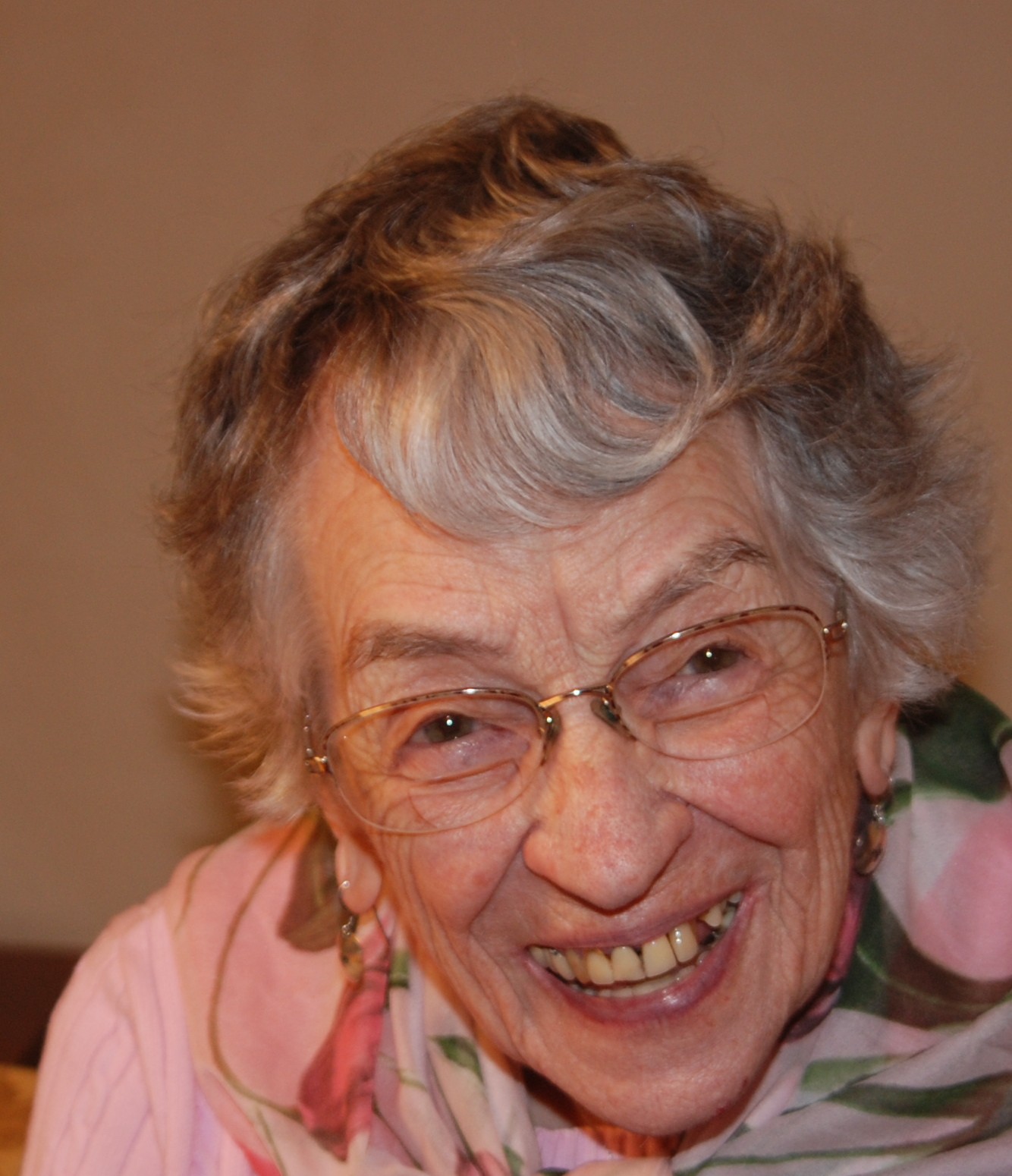
I had a much older friend once, herself gone now a year, who was always coming or going somewhere interesting. Even in her 80’s she’d be on a bike ride from Hanoi to Saigon, trekking in the Himalayas of Nepal, or on a safari in Africa. “The dirtier the better,” she’d say.

I always said I wanted to grow up and be like Sally. She would have liked this place.

The DR is poor. Part of Hispaniola, along with Haiti it’s two of the poorest nations in the Western Hemisphere. Which, I think, accounts for the strong Evangelical influence we saw all over the place.
Jesus viene pronto! Búscalo! Jesus is coming soon, Look for it!
Jesus es poder. Búscalo! Jesus is power. Look for it!
Jesus es la vida. Búscalo! Jesus is life! Look for it!

Poverty often pushes people towards God.

When I spent almost two weeks in Nicaragua several years ago with the North Country Mission of Hope, I met person after person, who, at least to the standards we know, had nothing—at least materially. But they had a strong faith and a strong sense of hope attached to that faith. Perhaps it’s the same with Dominicans.

In the end, it was only the tour that was a bit of disappointment, along with the pitifully short time spent at port. It certainly wasn’t the island, its people or its stupendous views of long, white, palm-fringed beaches. I met a mental note to come back to this island—but to explore it on my own.

The contrast to that and today’s destination, Tortola, The British Virgin Islands, was sharp.

We travelled through the night, slowly, I imagine, to our second port of call. The next morning we got off the ship vowing not to take a boat sponsored tour on an island small enough to spit across. Instead, we bought an off-boat island tour which brought us out of Road Town, the upscale port city, up into the mountains where we stopped often to get magnificent vistas of a remarkable volcanic shoreline, and views of many of smaller Virgin Islands that were but a speck on the horizon.


But here in this small, economically comfortable, British outpost, there was nary a sign of God. A few churches, but certainly no signs that we were in the last days with Jesus coming soon. The citizens here lived the good life, in nice houses, with nice shops, good restaurants. In other words they had good jobs that gave them good salaries. God might be easier to put in the back pocket when you’ve got more than you need.

Just a thought.

Our day on Tortola was uneventful, but pleasant, but I’m not convinced there’s enough of a reason to return.

Two islands, neighbors, but radically different. I’m glad I had the opportunity to visit them, albeit briefly.


Wednesday, October 27, 2010

El Caribe: Anchors Away

Day 3
October 25, 2010
At Sea

The sun was barely up on Saturday morning when we found ourselves at the new “Plattsburgh International Airport,” waiting for a puddle-jump flight that would take us to Boston where we’d begin our 15 day cruise. It was a crisp, cold late October morning. Frost hung in the air.

As Glenda and I sat in the boarding area, I looked up and noticed a woman I’d worked with from my NCCS days. “Silva,” I said, “Let me guess why you’re here.”

“NCL? Cruise to the Caribbean?” I asked.

I knew the answer. I’d known Silva as a School board member and after-school tutor who’d often use the library as home base. I knew she was an avid cruise taker, so wasn’t at all surprised to see her.

“This is cruise #81,” she said. “All on NCL.”

At that point, two other people piped up and said they were also on the cruise, heading home to New Orleans after a visit with a sister in Plattsburgh. There weren’t twenty people on the flight and more than 25% of us were heading south to warmer climes, sub-tropical islands, and lazy days at sea.

The journey had begun.

An hour later we were at Logan International where an NCL rep met us before taking bunches of us to the pier, a short bus ride away. We’d seen the boat flying in; we could have walked.


Once on board, we amused ourselves getting oriented to the boat, trying to find something to eat (not a hard thing to do on a cruise ship), and unpacking. By 8:00 pm, four hours later than scheduled, we set sail.

When I was 14 years old, my parents, brother and I took a four day cruise from Miami to Nassau. In the long shadow of memory, I vividly remember our disembarkation as a joyous, fun event. Somewhere a band played, people cheered and threw paper streamers from the deck. It was long time before the EPA when it was still OK to pollute American waterways.

This night, we simply slipped out of port, the skyline of Boston fading to black. I stood on deck, simply because it’s what I’ve always done when we disembark, and thought back to that first cruise, when my brother and I were still children and my parents were young.

“Bon Voyage,” I whispered to Mom and Dad, both gone now. I tried not to miss them, but it was hard at that moment. I just knew they would be with me on this trip.

We were traveling a straight-line trajectory down the East Coast of the United States. By Day 2, we woke close to the mainland of Virginia. We were far out at sea, far enough for the casino to stay open most of the day and all night. (“Yay!,” said Glenda.) All around us was the autumn-chilled Atlantic.

The sun was still low in the sky, so a day poolside wasn’t an option. No problem. From previous experience, I’ve come to love “sea days.” No one has to be anywhere. Not a thing is expected of anyone. It’s a time to kick back, enjoy what the ship has to offer, drink lots of Diet Coke and relax.

Occasionally, we’d see a large shipping vessel or barge, but other than that we saw no other evidence of civilization. It was wonderful.

How to spend such a day? An hour over breakfast staring out at the sea. Two hours doing a slow workout in the gym. A two hour nap. A long dinner at dusk as the sun set, another hour in the casino (I lost $10.00 in three nano-seconds), and a long walk around the ship relishing a stiff ocean breeze, and gazing at a tranquil sea under an almost full harvest moon.

By Day Three a new laziness had set in. Because we were in an inside cabin, it’s like sleeping in a tomb. I turned on my flashlight to see the time.

8:40 a.m. Neither of us wanted to emerge into the day. Monday morning. Why bother. A whole luxurious day lay before us with no place to go and no one to meet.


It was our second day at sea, and I promised Silva to join her “East Meets West” trivia team at 10:00 a.m. But I’m a bust at trivia and my mind is hardly alert that early in the day, so I was no bonus to the team. Instead, I’d do what I do best—spend the afternoon at the pool, soaking up the sun, and napping.

We were off the coast of Florida, so the days were warmer, the sun higher. But after three hours of lying in the sun, jumping into the pool and relaxing in the hot tub, it was time to leave.
I lazed the third late afternoon away in the 12th floor “Galaxy of the Stars” lounge which was wrapped with twelve foot windows facing the front of the ship. All late afternoon I read, wrote, gazed out at the sea. By now we were on a line with the Florida Keys and would, by late evening, enter lusciously-colored Caribbean waters. A live jazz quintet provided us with great tunes, and I had to force myself out of the space to watch the sun set.

Just before sundown, I took another swim in the saltwater swimming pool on Deck 13. Oblique rays of sunlight dazzled off the slate hued Atlantic. I watched as a translucent red ball sank in a pallet-splash of reds and oranges. As daylight diminished, clouds turned from shades of blue, to gray and finally to dark. Venus, a diamond glitter, hung low in the Eastern sky—the promise of clear night sailing.

It was a fine end to a very fine day.

Friday, October 22, 2010

El Caribe: Getting Going

Plattsburgh, NY
October 22, 2010

We're off! 8:10 am flight from Plattsburgh to Boston then a 4:00 pm cruise departure from there. Two days on the open sea then our first port--Dominican Republic.

But this trip is more than a cruise. On November 5th, at our last port, I'll disembark and head to Mexico City where a new job awaits--working with a Quaker Community in the city as a librarian to the country's largest collection of Quaker materials in the country.

I'll also be there for the
Centennial of the Mexican Revolution (November 20th), the emergence of Christmas and, best of all, Our Lady of Guadalupe Day (December 12th) before a return flight home on December 13th!


ITINERARY

DAYDATEPORTARRIVEDEPART
SatOct23Boston, MA4:00pm
SunOct24At Sea
MonOct25At Sea
TueOct26Samana, Dominican RepublicNoon6:00pm
WedOct27Tortola, British Virgin Islands9:00am6:00pm
ThuOct28St. Kitts8:00am4:00pm
FriOct29Barbados10:00am6:00pm
SatOct30At Sea
SunOct31Curacao8:00am6:00pm
MonNov1Aruba8:00am5:00pm
TueNov2At Sea
WedNov3At Sea
ThuNov4Roatan, Honduras8:00am4:00pm
FriNov5Cozumel, Mexico8:00am5:00pm
SatNov6At Sea
SunNov7New Orleans, LA8:00am


Tuesday, September 28, 2010

A Day on the Beach in Acapulco: 50 Pesos

Mexico City
28 de Septimebre de 2010

So, I´m sitting on the beach in Acapulco. It´s late September and blistering hot on the Pacific Coast. The bay, never really clean, is dirtier than usual. Heavy rains in the mountains have washed all sorts of debris down the rivers that feed into Acapulco Bay. I´m quite content to be alone for a few days after the festivities in Mexico City. I just avoid swimming in the ocean.

It's way, way low season. Very few tourists. Which all great by me because it means that no one's on the beach.

Except...the Mexican who's got a day off.

This guy has been eying me. Nothing suspicious. I just think he wants to talk. I finally see hello and we spend the rest of the afternoon, off and non, chatting. He wants to practice is English, but we spend 98% of the time in Spanish. He works in a restaurant. Invites me to come the next day. We talk about what it's like to live in Acapulco, what other beaches there are on the other side of the bay, how to get there. In the end I decide that if I'm back in the city I'll track him down to be my guide for a day out of town. 100 pesos. Not a bad deal at all.

After awhile we really lack for things to talk about. He wants to know how much money I make, something I never divulge in poor nations. I ask him.

"Fifty pesos," he tells me. For twelve hours of work. Plus tips. Fifty pesos. As 12 pesos to the dollar that equal $4.50 a day!

$4.50 a day!

I deal with this all the time with the few Mexicans I know. They really struggle to make ends meet, and struggle in a way that's much more severe than the average American knows. Give up any idea of a vacation. Give up the idea of owing a home. One friend can only afford 800 pesos a month for an apartment. $65.00!

And these days life in Mexico is even tougher. Fewer tourists mean fewer jobs. many people work two or three jobs just to make ends meet.

Perhaps this is why hooking up with a cartel is such a lure. Of course it's dangerous. Of course it's illegal, but it's a way of bringing a whole lot more cash into your life than a measly $4.50 a day for 12 hours of work.

At least my new friend on the beach hasn't gone this direction. LIke the vast majoity of Mexicans he's appalled at what's happening and is looking to the USA for a solution. It is, after all, us who's fueling these ccartels. Without our rampant drug addiction, there'd be no cartels.

And if there weren't cartels, maybe far more tourists would come back and this guy could earn a decent salary.

Just a thought!

Photos of Independence Day


Tuesday, September 21, 2010

Viva Vexico! Viva el Bicentenario!

Mexico City
21 de Septiembre de 2010

2010 is an important year for Mexicans. It´s the Bicentennial of their Independence (September 15th) and the Centennial of its Revolution (November 20th). Two hundred years of history and two good reasons for Mexicans to celebrate.

I´d come to Mexico City to be part of the Bicentenario, to participate in this historic event. I had long ago claimed Mexico as my adopted country, and I was not about to miss the party.

Forgive me, but I´ve cut and paste the 100 word intro to Independence in Mexico:

¨In 1810, Mexican-born Spaniards — the creoles — saw no recourse other than violence as the means to gain independence from Spain. Their principles were inspired by the doctrines of 16th-century thinkers like the Jesuit Francisco Suárez, who argued for “popular sovereignty.” But the creoles were also driven by specific grievances: they had long resented domination by men from the Iberian Peninsula; they were also indignant that the seemingly inexhaustible wealth of New Spain had been the principal financial resource for the frivolousness and senseless wars of the Spanish empire.

Yet the crown repeatedly ignored opportunities that might have avoided violent revolution — Spain certainly could have loosened connections with its overseas dominions and granted Mexico some degree of independence. When the provincial priest Miguel Hidalgo y Costilla shouted his call to arms, the grito, from the steps of his Dolores church, the war for independence finally exploded. (Krauze, Enrique, New York Times, September 15, 2010)

I wanted to experience the whole event, the whole shebang, the full nine yards. But that was just not going to be possible, especially in a city of 25,000,000 people. On the 15th, two significant events would take place. I could choose the extravagant, four hour parade with over 100 floats, thousands of participants and scores of bands.

Or, I could choose to be in the absolute epicenter where I would witness President Felipe Calderon deliver the grito de Dolores, followed by what Mexico had promised to be the bigget, most outrageous display of fireworks ever presented in the history of the country.

I chose the latter and was absolutely thrown off balance!

My friend, and guide, for the evening, Gerardo Rodriguez, met me at 5:30. We made out way to the Zocalo, Mexico City´s enormous public square (one of the largest public plazas in the world) that housed the Palacio Nacional and the Catredal Metropolitano. This would be home to the evening´s principal events--events that would be telecast nationally, and would be watched by millions of Mexicans.

The lines getting into the Zocalo were long--almost half a mile. Numbers would be limited to 200,000 so it was important to get there early. We went through two separate security checks. No bottles. No alcohol. (There was a 48 hour ban on the sale of alcohol in the city.) Nothing that could be construed as a weapon. A third security check brought us through a metal detector, followed by a pat down. Mexico City did not want a repeat of what happened a year earlier when a bomb went off in Morelia and killed several people.

By 7:30 we we were among the fortunate 200,000 tucked inside the Zocalo. There was really nothing to do but wait. Nothing would happen until 10:00 pm when the nation´s eyes would be on this spot. All official buildings surrounding the plaza had been decorated and lit up with thousands of lights with huge illuminated portraits of the two principal heroes of independence, Miguel Hidalgo and Jose Morelos, framed by the years 1810--2010!

Surrounding us were huge television screens. We simply found a place to sit on the pavement and sat. Outside, wending its way slowly towards the Zocalo, was the extravagant Bicentennial parade. Que pena! What a shame! I wanted to see that, too, but it was either that or spending the evening in the Zocalo. So we watched it on tv instead. Surrounding us were gigantic television screens, so we were able to see the parade that way.

A few entrepreneurs had been able to sneak in with things to slle and were doing a brisk business selling Bicentennial kitch--wigs with the Mexican tri-color of red, green and white, horns, flags and garish sunglasses lit up with 2010!

It was a polite, friendly group of people. Fortunately, we´d brought food and two bottles of water, (Later, the bottles would come in handy becaus the lines for the porta-potties were a hundred deep.)

By 10:00 pm we thought we should move. We hadn´t thought much of where we were sitting, and realized that we were a bit far back to have a close-up and personal experience with the evening. Watching it on TV had been ok, but this was the real thing.

Very slowly, because the crowd was enormous and thick, we wiggled and wormed our way through the masses. We literally had to hold on to each other otherwise we´d get separated, and once separated here there´d be no finding each other. Slowly, we got to an end point where we simply could not go further. Three hundred yards, directly in front of us, was the balcony where President Felipe Calderon would deliver the famous grito de Dolores; 300 yards immediately to our left was the Cathedral, Mexico´s oldest and most important church. Life didn´t get much better than this.

Two stages had been set up on either side of us. Bigger-than-life-entertainment went from stage to stage: Mexico´s opera house sent its stars to perform arias; a famed Mexican singer sang the official Bicencentennial song; Cirque de Soleil had acrobats climbing vertical wires in an intricate display of physicality that ultimately ended with them forming the words MEXICO. The crowd went wild.

By 10:30 the principal contingents of the parade had entered the Zocalo--huge floats, brass bands, a huge balloon carrying the emblematic symbol of Mexican Independence, an angel, floating below the huge orb.

At 10:45 an almost weird, apocolyptic figure, 200 feet high, rose in the Zocalo. I had the spooky feeling it was the resurrected image of Hidalgo. ¨Who is he? I asked people around me. No one seemed to know. In the end, I think it was a composite form of the heroes of Independence. Frankly, for me, it was just plain odd.

By 10:55 the television monitors around us (We were so packed in that this was really the only way for all of to see what was happening on the ground.) showed Calderon and his beautiful wife walking through the hallls of the Palacio Nacional. Following them was an honor guard carrying the Mexican flag. We were close enough to see the President emerge onto the balcony, take the flag from his guard, and approach the railing.

There was a hush. This was the start of a script written long ago, and known by all Mexicans, and played out throughout the country, in every village, in every town, in every city, in every Mexican state at the same allotted time.

Facing the Zocalo, a military band began to play the Mexican National Anthem.

For this I could only stand back and listen. Imagine the voices of 200,000 singing the words they all knew so well.

Immediately following the anthem, President Calderon began the grito el Dolores...the shout that would be heard all through Mexico, in every public square, at 11:00 pm each September 15th.

Viva Hidalgo! shouted el Presidente

VIVA! thundered the crowd.
Viva Morelos!
Viva!
Viva Doña Josepfa Ortiz de Dominguez!
Viva!
Viva los heroes que nos dieron patria!
Viva!
Viva Allende!
Viva!
Viva la Independencia!
Viva!
Viva el Bicentenario!
Viva!
Viva Mexico!
Viva!
Viva Mexico!
Viva!
Viva Mexico!
Viva!

This time, because I have long considered Mexico to be my adopted country, I joined the chorus! Viva!

What a moment! Mexico had officially celebrated its 200th birthday!

The grito had barely hushed when huge jets of fire, computer choreographed to military music, erupted over the 1,00o foot long Palacio Nacional. It was a sensual overload!

And then.... And then... The fireworks. We turned our attention left to the Cathedral where, as promised, eight tons of fireworkds exploded over the church. it was as if we were in a war zone.

I could only think of our own anthem this marvelous night; ¨...and the rockets red glare, the bombs bursting in air...¨ OMG! What a site. Mexico had promised that it would be the biggest display of fireworks ever performed in the country.

Thirty minutes later, the air filled with smoke and fine ash drifting softly around us, the Zocalo party ended.

But it was hardly the end. As you can imagine, no one really wanted to leave. The afterglow of such a huge event kept people rooted in place. A swing band took over one of the stages. people danced. People took photos of each other. People just sat on the ground not wanting to leave. And, because we´d been standing for ever so long, we sat, too. Just sat and tried to take it all in.

We finally did leave the Zocalo--ever so reluctantly. Slowly we made our way down Calle Madero (the city had closed off 100 streets for two days). Revelers were everywhere. We were sprayed with shaving cream, pelted with empty eggs shells filled with confetti. Thousands and thousands of people were in the street. Venders were everywhere and we finally got something to eat. A mile later, past Bellas Artes, Mexico City´s Opera House, past the lovely Alameda Park, we came to Reforma, Mexico City´s Fifth Avenue. A huge street party was in progress with thousands and thousands yet again filling the streets, dancing to the bands that had been set up at the city´s iconic Monument to Independence way down the street. Huge screens projected the action on the stage. It was 1:00 a.m. and I was super-energized. I just joined in the fun. Gerardo, however, who´d been up since 4:00 a.m was fading fast. ¨Treinta minutos mas,¨I begged. Thirty minutes more. By 1:30 were were walking toward the metro when we stumbled on yet another sreet party with a dynamic salsa bandpounding out tunes. Celia Cruz had even come back from the dead.

¨Pa' loma, Paloma...,¨ she crooned. My dancing feet couldn´t stand still. Poor Gerardo! By now he´d turned into a pumpkin (an impossible phrase to convey in Spanish.) It really was time to call it quits. I simply didn´t want to stop, though. But, while the spirit was willing, the body was wouldn´t.

It was long past 2:00 a.m. I put Gerardo into a cab, walked through the still crowded party-heavy streets of my neighborhood, got to my hotel and slipped into bed.

Viva Mexico!
Viva la noche!
Viva el Bicentenario!

Que noche!

What a night it had been.

Friday, August 13, 2010

Bike Paths of Montreal

Montreal, Quebec
August 13, 2010

It's been my good fortune to house-sit for two weeks in Montreal in a great neighborhood and in the most fabulous house. It was built as a Baptist Church 125 years ago, then was purchased by an Orthodox Jewish congregation, then sold to the present owner 30 years ago. The Ten Commandments are above the front door as you enter the house.

But...I digress. This is about the bike paths of Montreal. I've read that Montreal has the best network of bicycle paths in North America. As of this year there are close to 700 kilometers, with more being cut out yearly. It's a bicycler's dream.

I lived in Montreal for the first two weeks of August, just as I did last year. This year I had very definite destinations in mind. Let me tell you about three of them.

Sunday, August 1, 2010

I left the house early, rode to the Metro and put my bike on it and rode to the furthest destination possible--Honore Beaugrand. From there I rode east to the St. Lawrence River where I met a ferry that would bring me to Boucherville Island.

Boucherville Island is really an archipeligo consisting of ten islands, and on summer weekends it's posisble to access the island via bicicyle ferry. There had to be 50 or more of us early on this beautiful Sunday morning.

Boucherville is a biker's dream. The entire archipeligo is accessible via well maintained light gravelbike paths with bridges and one ferry connecting the smaller island. An entire circumfrence is 15 km, but any zigzag on the island will easily bring that tally higher.

And zigzag I did. Past cornfields and fresh water marshes. Past astounding views of the the South Shore of Montreal. Past people sunbathing and picnicers enjoying a quiet meal on an isolated stretch of beach. Past vistas of Montreal in the far distance. Past families enjoying a day away from the city. Past scores of others bikers, as well as runners and walkers. Past an 18 hole golf course. Past a vast picnic area where white-bread native Montrealers were sharing space with newly arrived Chinese and Islamic immigrants, whose women were dressed in multicolored birkas. A true hodge-podge of the divesity that makes up the wondrous city of Montreal. Past an Indian interpretive center where recent archeological work has unearthed evidence of First People's presence for more than a 1,000 years.

I ferried back to the island and slowly wend my way through neigborhoods I'd never seen before until I reached home with 68 km. under my belt. A great day!

Monday, August 9, 2010

For years I've seen narrow strip of land below the Champlain Bridge as I'm crossing off the island. The track runs north-south and for all those years I've almost always seen lone bikers on it. Today I'd find out what this was all about.

I left the house, made my way to the Jacques Cartier Bridge and rode half across it, dropping off it onto Ile St. Helene. From there I bike past the site of Expo '67 and the now iconic Biosphere still standing. At the southern end of the island I pick up the path. It's arrow-straight. My initial goal was the service bridge connecting the two sides, but it's a seeringly hot day, it's relatively cool by the water, and I've got lots of energy. I pull out my map and ask a couple of bikers picnining near the bridge how far it is to Sainte Catherine, a small town on the South Shore. They tell me 10 km., 20 return. I can do that. So I take off. The bike bath is not much more that a wide berm created 50 years ago when the St. Lawrence Seaway was dug out. I'm assuming this causeway is the result of dredging the canal deeper. Dig out the canal, dump it next door and, bam!, we've got a great bike path. (For years I'd assumed it was built with dug up dirt and residue when the Montreal Metro went in in the 1960's.) Today, with the help of markers, I realize it was done in 1959 as part of the Seaway project.

At one point there is a memorial to a young man who was
last seen at that exact spot. Lost September, 1978.
Murdered and dumped into the river? A suicide? An accident? His family/friends caution new riders: "Soyez Prudent!" Be careful!

After about an hour I get to St. Catherine, but where the berm ends, a fabulous park begins. I keep biking south, all the time paralleling the St. Lawrence, until I butt up against the Lachine Rapids. This is the 2nd best viewing point I've ever had to view them. And on this weekday, it's a real pleasure to have the viewing area almost to myself. I do have a few questions, though. I see houses on a nearby island, right near the rapids. Who lives there and why? There are a few other bikers, but on this side of the Montreal, off the main island, I'm in no-English-land. I never do find out.

I find my way to the village of St. Catherine, buy lunch at a supermarket. My lips are zip-shut. I don't speak any French, and when I do, Spanish comes out. Fortunately, a sandwhich is a sandwhich everywhere in the world. It's only when I go into the supermarket do I realize just how hot it is outside. I'll lunch indoors today.

My mid-afternoon I retrace my steps, cross the service bridge, slip back into Montreal after a zig-zag through Nun's Island. By now I'm slogging home, and when I finally do get back to the synagogue, as it's fondly known, I've clocked 55 km on my bike. Another great day!

Saturday, August 14, 2010

It's my last day in the city and I do not want to do to this bike ride. I lay in bed saying, "Yes, you've got to this because it's the only day left this summer to do it," and "No, it's another 40 miles and your legs and butt hurt and it's another hot, humid day."

But I rarely give in to that type of thinking, so I get out of bed, get dressed and head off. My goal in the Lachine Canal bike path all the way to Lachine, then a one-hour ferry ride across Lac St. Louis to Chateguay and a three hour tour of that area.

It's a race against time as I've got to be at the port by 11:00 am.

In 2009, Time magazine labelled the Lachine Canal the 3rd best urban bike trail in the world. It starts in the Old Port of Montreal and runs to Lachine, 15 km due west. The Canal was dug out in 1825 and provided a bypass around the very dangerous rapids in the river--a much safer way for boats to get to Montreal.
For well over a centurty factories and warehouse lined the canal. But the Seaway, 1959, put an end to the canal and by 1970 it was shut down. The factories were abandoned, the neighborhoods adjoining the canal were derelict and the canal....well...it became a repository for all sorts of nasty things--old cars, dead bodies, garbage.

By the mid-1990's a major urban renewal project started. The canal was cleaned up, and the locks were refurbished. Small boats could now make their way from the St. Lawrence to the Lac Louis to the west. Real estate developers bought up the facories and warehouses and converted them to tony residences that now cost in the half millions of dollars. The city put in a top-notch bike bath from center- city to Lachine, then cut another trail from Lachine back to the city along the shores of the St. Lawrence.

Even early in the morning the bike path was busy. I managed to get to Lachine with time to spare, justified a 2nd breakfast of two muffins and a Diet Coke, and board the bike ferry at 11:15.

The ride across the lake is fun. It's called a lake, but it's really a wide, tranquil part of the river. The calm before the storm of the Rapids a bit further downstream. Chateguay is a bit of disappointment. It's just a small town, not well off--a poor cousin to its more glamourous nieghbor a boat ride away. But it's a good time to slow down, eat lunch by a pond, watch a wedding unfold, ride past late summer meadows filled with goldenrod and grasses.

By 3:00 I'm back on the ferry and energized for the finale--a much longer ride along the St. Lawrence. I've done this before and remember it fondly. I'm not disappointed today. I ride under the Mercier Bridge, past sun bathers sitting in beach chairs, their feet dangling in quiet parts of the river, past picnicers enjoying a warm, late summer's afternoon. I'm psyched, though, because I remember the last time I'd done this I'd seen surfers on the river. Surfers! I parked my bike, settled in and and was fortunate to actually see a young man hold a wave for over a minute.
In the end, I clocked up a 65 km ride for my final day in the city. All total, I'd ridden 301 kilometers, which means that 450 km. of bike paths are still waiting for next year. It had been a great series of rides--past surfers, over bridges and on boats that connect the island of Montreal with the the mainland. I'd found a Vietnamese Buddhist temple tucked away in a quiet residencial neighborhood and I'd come across a Swing and Jive dance held in one of the parks hugging the St.Lawrence. I'd see the Lachine Rapids from both sides of the river and spent a hot, humid afternoon sweating my way up the highway climbing Mount Royal.

I'm convinced that the only way to really see a city is on foot or on bike. I'd certainly done the latter!

I'm already looking forward to 2011!


Mexico Redux--June 2010

June 20, 2010
Mexico City

The events of spring 2010 had become too much and it was time for a change of scenery. I'd come to Mexico in the Fall of 2009, just when Mom began to fail. This was to be, I thought, a sort of book-end, to enclose the events of fall/winter/spring.

So, on June 3rd I left Montreal for a 27 day trip that would bring me primarily to Mexico City, then on the the stark and gorgeous beach town of Zipolite, eight hours south of Acapulco, on the west coast, then to Zitacuaro, where I would meet Jose Guadalupe, the boy I sponsor through Christian Children's Fund.

Let the photos suffice
Jose and his family

Zipolite


The wild Zipolite surf.


A horse ride along a deserted beach brought me to this plane wreck on the beach.


A nature preserve with boas, crocodiles, deer and monkeys.


The wild, Pacific coast of Mexico


Let the photos suffice...