Friday, August 13, 2010

Bike Paths of Montreal

Montreal, Quebec
August 13, 2010

It's been my good fortune to house-sit for two weeks in Montreal in a great neighborhood and in the most fabulous house. It was built as a Baptist Church 125 years ago, then was purchased by an Orthodox Jewish congregation, then sold to the present owner 30 years ago. The Ten Commandments are above the front door as you enter the house.

But...I digress. This is about the bike paths of Montreal. I've read that Montreal has the best network of bicycle paths in North America. As of this year there are close to 700 kilometers, with more being cut out yearly. It's a bicycler's dream.

I lived in Montreal for the first two weeks of August, just as I did last year. This year I had very definite destinations in mind. Let me tell you about three of them.

Sunday, August 1, 2010

I left the house early, rode to the Metro and put my bike on it and rode to the furthest destination possible--Honore Beaugrand. From there I rode east to the St. Lawrence River where I met a ferry that would bring me to Boucherville Island.

Boucherville Island is really an archipeligo consisting of ten islands, and on summer weekends it's posisble to access the island via bicicyle ferry. There had to be 50 or more of us early on this beautiful Sunday morning.

Boucherville is a biker's dream. The entire archipeligo is accessible via well maintained light gravelbike paths with bridges and one ferry connecting the smaller island. An entire circumfrence is 15 km, but any zigzag on the island will easily bring that tally higher.

And zigzag I did. Past cornfields and fresh water marshes. Past astounding views of the the South Shore of Montreal. Past people sunbathing and picnicers enjoying a quiet meal on an isolated stretch of beach. Past vistas of Montreal in the far distance. Past families enjoying a day away from the city. Past scores of others bikers, as well as runners and walkers. Past an 18 hole golf course. Past a vast picnic area where white-bread native Montrealers were sharing space with newly arrived Chinese and Islamic immigrants, whose women were dressed in multicolored birkas. A true hodge-podge of the divesity that makes up the wondrous city of Montreal. Past an Indian interpretive center where recent archeological work has unearthed evidence of First People's presence for more than a 1,000 years.

I ferried back to the island and slowly wend my way through neigborhoods I'd never seen before until I reached home with 68 km. under my belt. A great day!

Monday, August 9, 2010

For years I've seen narrow strip of land below the Champlain Bridge as I'm crossing off the island. The track runs north-south and for all those years I've almost always seen lone bikers on it. Today I'd find out what this was all about.

I left the house, made my way to the Jacques Cartier Bridge and rode half across it, dropping off it onto Ile St. Helene. From there I bike past the site of Expo '67 and the now iconic Biosphere still standing. At the southern end of the island I pick up the path. It's arrow-straight. My initial goal was the service bridge connecting the two sides, but it's a seeringly hot day, it's relatively cool by the water, and I've got lots of energy. I pull out my map and ask a couple of bikers picnining near the bridge how far it is to Sainte Catherine, a small town on the South Shore. They tell me 10 km., 20 return. I can do that. So I take off. The bike bath is not much more that a wide berm created 50 years ago when the St. Lawrence Seaway was dug out. I'm assuming this causeway is the result of dredging the canal deeper. Dig out the canal, dump it next door and, bam!, we've got a great bike path. (For years I'd assumed it was built with dug up dirt and residue when the Montreal Metro went in in the 1960's.) Today, with the help of markers, I realize it was done in 1959 as part of the Seaway project.

At one point there is a memorial to a young man who was
last seen at that exact spot. Lost September, 1978.
Murdered and dumped into the river? A suicide? An accident? His family/friends caution new riders: "Soyez Prudent!" Be careful!

After about an hour I get to St. Catherine, but where the berm ends, a fabulous park begins. I keep biking south, all the time paralleling the St. Lawrence, until I butt up against the Lachine Rapids. This is the 2nd best viewing point I've ever had to view them. And on this weekday, it's a real pleasure to have the viewing area almost to myself. I do have a few questions, though. I see houses on a nearby island, right near the rapids. Who lives there and why? There are a few other bikers, but on this side of the Montreal, off the main island, I'm in no-English-land. I never do find out.

I find my way to the village of St. Catherine, buy lunch at a supermarket. My lips are zip-shut. I don't speak any French, and when I do, Spanish comes out. Fortunately, a sandwhich is a sandwhich everywhere in the world. It's only when I go into the supermarket do I realize just how hot it is outside. I'll lunch indoors today.

My mid-afternoon I retrace my steps, cross the service bridge, slip back into Montreal after a zig-zag through Nun's Island. By now I'm slogging home, and when I finally do get back to the synagogue, as it's fondly known, I've clocked 55 km on my bike. Another great day!

Saturday, August 14, 2010

It's my last day in the city and I do not want to do to this bike ride. I lay in bed saying, "Yes, you've got to this because it's the only day left this summer to do it," and "No, it's another 40 miles and your legs and butt hurt and it's another hot, humid day."

But I rarely give in to that type of thinking, so I get out of bed, get dressed and head off. My goal in the Lachine Canal bike path all the way to Lachine, then a one-hour ferry ride across Lac St. Louis to Chateguay and a three hour tour of that area.

It's a race against time as I've got to be at the port by 11:00 am.

In 2009, Time magazine labelled the Lachine Canal the 3rd best urban bike trail in the world. It starts in the Old Port of Montreal and runs to Lachine, 15 km due west. The Canal was dug out in 1825 and provided a bypass around the very dangerous rapids in the river--a much safer way for boats to get to Montreal.
For well over a centurty factories and warehouse lined the canal. But the Seaway, 1959, put an end to the canal and by 1970 it was shut down. The factories were abandoned, the neighborhoods adjoining the canal were derelict and the canal....well...it became a repository for all sorts of nasty things--old cars, dead bodies, garbage.

By the mid-1990's a major urban renewal project started. The canal was cleaned up, and the locks were refurbished. Small boats could now make their way from the St. Lawrence to the Lac Louis to the west. Real estate developers bought up the facories and warehouses and converted them to tony residences that now cost in the half millions of dollars. The city put in a top-notch bike bath from center- city to Lachine, then cut another trail from Lachine back to the city along the shores of the St. Lawrence.

Even early in the morning the bike path was busy. I managed to get to Lachine with time to spare, justified a 2nd breakfast of two muffins and a Diet Coke, and board the bike ferry at 11:15.

The ride across the lake is fun. It's called a lake, but it's really a wide, tranquil part of the river. The calm before the storm of the Rapids a bit further downstream. Chateguay is a bit of disappointment. It's just a small town, not well off--a poor cousin to its more glamourous nieghbor a boat ride away. But it's a good time to slow down, eat lunch by a pond, watch a wedding unfold, ride past late summer meadows filled with goldenrod and grasses.

By 3:00 I'm back on the ferry and energized for the finale--a much longer ride along the St. Lawrence. I've done this before and remember it fondly. I'm not disappointed today. I ride under the Mercier Bridge, past sun bathers sitting in beach chairs, their feet dangling in quiet parts of the river, past picnicers enjoying a warm, late summer's afternoon. I'm psyched, though, because I remember the last time I'd done this I'd seen surfers on the river. Surfers! I parked my bike, settled in and and was fortunate to actually see a young man hold a wave for over a minute.
In the end, I clocked up a 65 km ride for my final day in the city. All total, I'd ridden 301 kilometers, which means that 450 km. of bike paths are still waiting for next year. It had been a great series of rides--past surfers, over bridges and on boats that connect the island of Montreal with the the mainland. I'd found a Vietnamese Buddhist temple tucked away in a quiet residencial neighborhood and I'd come across a Swing and Jive dance held in one of the parks hugging the St.Lawrence. I'd see the Lachine Rapids from both sides of the river and spent a hot, humid afternoon sweating my way up the highway climbing Mount Royal.

I'm convinced that the only way to really see a city is on foot or on bike. I'd certainly done the latter!

I'm already looking forward to 2011!


Mexico Redux--June 2010

June 20, 2010
Mexico City

The events of spring 2010 had become too much and it was time for a change of scenery. I'd come to Mexico in the Fall of 2009, just when Mom began to fail. This was to be, I thought, a sort of book-end, to enclose the events of fall/winter/spring.

So, on June 3rd I left Montreal for a 27 day trip that would bring me primarily to Mexico City, then on the the stark and gorgeous beach town of Zipolite, eight hours south of Acapulco, on the west coast, then to Zitacuaro, where I would meet Jose Guadalupe, the boy I sponsor through Christian Children's Fund.

Let the photos suffice
Jose and his family

Zipolite


The wild Zipolite surf.


A horse ride along a deserted beach brought me to this plane wreck on the beach.


A nature preserve with boas, crocodiles, deer and monkeys.


The wild, Pacific coast of Mexico


Let the photos suffice...

Saturday, May 22, 2010

Photo Collage from Reception for Rita Ladue--May 2, 2010


"Strawberries and Joy:" A Eulogy for My Mother, Rita Ladue

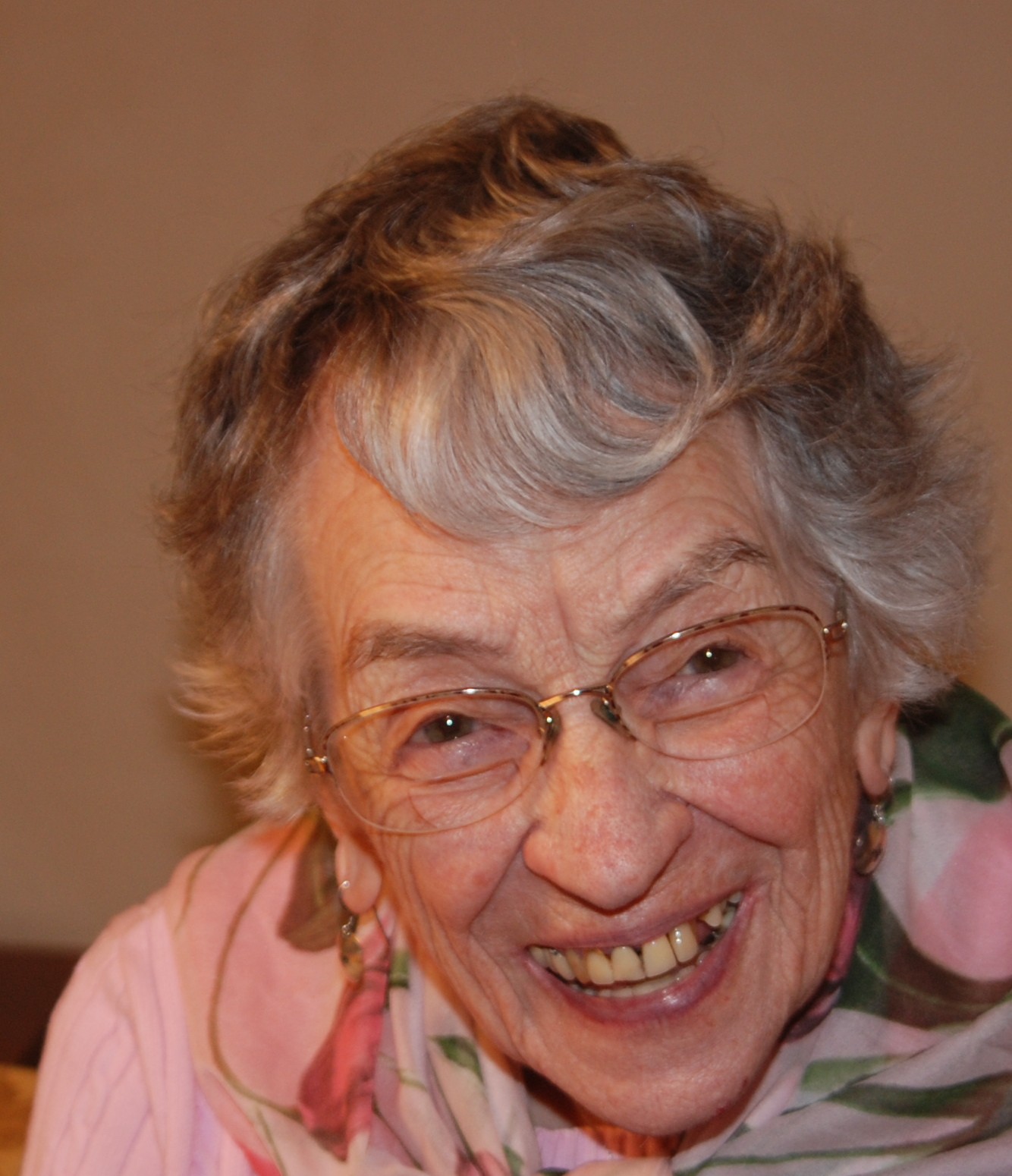
Rita Ladue
July 27, 1916, Saranac Lake, New York
April 9, 2010, Plattsburgh, New York

Strawberries and Joy


My mother’s name was Anna Rita Boyer Ladue. Anna Rita. Apparently, there were lots of Anna's around in 1916 which is why her parents decided to use her middle name. I learned that about her two weeks before she died. Wouldn’t you think I’d have known that after all these years?

Amazing, isn’t it, the things we continue to learn about people we’ve known all our lives.

Anna Rita was almost 94 years old. In fact, to be more precise, she lived 34,234 days. How, then, does one measure a life lived as long as Rita’s? No single eulogy could do justice to this much time lived.

Instead, let me bring you back to a single, well-lived day—a day that encapsulated, at least to me, the essence of my mother--Anna Rita Boyer Ladue.

Come back with me less than two years ago to the first full day of summer, 2008. Mom was on the cusp of 92 and had been living at Lake Forest for a year a half. Her days were quietly content. She was losing her sight, and her hearing, always bad, was failing her further. But these things, which could frequently cause enormous frustration, never brought her down. Within her, there was an optimism which often surprised me.

June 21, 2008 was a perfect, first day of northern summer--a day punctuated by soft, pale blue skies and high cumulus clouds. It was neither hot nor cold. Field daisies were in full bloom, Black-eyed Susan’s just opening up.

At breakfast, I’d seen an ad in the paper announcing that the year’s first crop of strawberries was ready. I called to ask her if she like to go to Rolf’s to pick. Now, for those of you who’ve known my mother for many years, you’ll understand that this was no idle invitation. In fact, it was sort of a “Dah” type of question. I knew she’d drop whatever it was that was on her calendar and seize the moment. If there was one single thing that could fuel her passion it was berry picking.

I picked her up and we headed down the Lake Shore Road. The lake was calm and blue; the Green Mountains lined the eastern horizon. It was a gorgeous day.

We were early at Rolf’s. We were assigned a line of berries and started picking. There was no need to talk. This was a shared moment we both enjoyed. Periodically, I’d check her pail and cull out berries that weren't quite ripe.

In time, we filled our buckets, anted up and left. Ten minutes later we were back on the Lake Shore Road. At the southern end of it, I pulled the car off the highway and turned off the ignition. I could see a place for us to sit. Together we just looked at the lake, the mountains, the blue sky, the clouds. She’d always told me we lived in “God’s Country” and on this particular day I had to agree. We didn’t speak much. There was no need to. I, at least, was aware that the day was special. In Mom that day I saw joy. I saw contentment. I saw happiness.

An hour or so later we left, drove north, and stopped at Stewart’s for an ice cream. But the day wasn’t quite done. Just past Stewart’s is an empty field where I knew there’d be wide patches of daisies for picking. She was thrilled. Strawberries, then daisies…all in the same day, with ice cream in the middle. Life didn’t get much better than this. We picked our way through the field, gathering huge bunches of daisies. “Pick a lot,” she told me. “I’ve got lots of arrangements to make.” So we picked, both of us. Every now and then I’d bring over smaller bunches of Black-Eyed Susans. In the end we had a car full of strawberries, bunches of wild flowers, full bellies of ice cream…… and a huge pile of joy!

Joy. Joy is a word we toss around. “Joy to the World.” Peace and Joy. But what exactly is joy? It’s a hard word to pin down, because what’s joyful to you is not necessarily joyful to me. But I’d seen joy that day; I’d been witness to an exhilaration of passion that brought forth great happiness. I knew the real thing when I saw it. In spite of all my mother’s limitations at the start of that summer, a simple, quiet day picking strawberries and wildflowers ignited within her a flame that burned to joy, and I loved watching it unfold.
-----
That was almost two years ago. Time passed. She failed, lost her vision. She fell, broke her back and then had a stroke.

Mom’s death was not pretty. The act of dying is often grim and frightening. I was deeply appreciative of hospice telling us that it would be harder for us to watch then for her to endure. At 1:15 on a lovely April Friday afternoon, my mom’s strong heart finally gave out. Three of us were with her, surrounding her with our love, trusting hospice that hearing was the last to go.

We sat with her for awhile, and then Marita and I left while Vicki stayed with Meadowbrook staff to prepare Mom’s body for transport to the funeral home.

“Blank,” said Marita, as we sat together. “I’m just blank.”
“Blank.” Yeah! That was the word I was looking for.

By Saturday afternoon, when I’d turned off all phones and slipped off to Montreal for a few days, the blank and flat had become the Big Blank and the Big Flat. I hadn’t cried. I was unable to express any emotion. I kept waiting for something to happen—some sort of emotional meltdown. But it never came.

Saturday flowed to Sunday then Monday.

But on Tuesday, four days after Mom died, an amazing transformation took place. I was taking a walk through a pleasant spring afternoon, when I became aware of her presence. And, like my mother, it wasn’t subtle.

I felt an intense, spectacular swirl of spiritual energy surrounding me. My mother’s presence totally enveloped me in its power and its love. I was so totally aware, and so totally stunned, by this dazzle of energy that it literally stopped me. It was powerful—a gorgeously layered spin and tumble of proof that Mom was not just ok, but better than OK. It shouted: “Hallelujah, Dan. I’m alive! I’m whole, complete and fully in the presence of my Creator.”

WOW!

I was never actually aware of the shift, but the Big Blank and the Big Flat had given way to joy—an exuberant joy that flung off the blankness and flatness…. and which has not left me yet.

Joyful! I’d become joyful on that city street on that fine April spring afternoon.

Joyful! If you’d said to me twenty years ago: “Pick the emotion that will best suit your mood four days after your mother died,” I’d hardly have picked joyful. And because it was unexpected, because it was so highly unimaginable, and because I’d been surprised by joy, I just knew that it was authentic and true. There was absolutely no way that I could have manufactured that feeling and kept it sustained since then.

What a gift!

I called Vicki, who was in Nashville, and shared with her what was happening. Why was I not surprised that she, too, was experiencing something similar. We had, after all, walked the same privileged final journey with her, so it made sense that she’d let both of us know that she was thriving.

What an extraordinary, spectacular beam of Godlight filled our souls that day, and the days after.

I later realized that joy had come full circle, that the joy she showed me on that splendid midsummer’s day two years ago had been returned to me. I knew with every fiber in my body that she was with God. I am convinced that my frail, 94 year old, deaf and blind mother, who’d broken her back and then had a stroke, was now complete, whole and in eternal grace.
----------
It was somehow fitting that Mom would leave us in the spring. It was a time of year that exhilarated her spirit—a return to her gardens, a return to the soil she loved to work, and a return to the young plants she’d nurture through summer into fall.

At first I resented the early crocus and forsythia I saw blooming as I traveled to and from Meadowbrook. Initially, they were a reminder of her impending death, and I thought that they’d forever be linked to her dying time.

But as the days turned to weeks, I was able to shift the imagery. Mom was so spiritually ready to go to glory and bliss, that by the time she did die, those flowery blooms no longer reminded me of her death, but, rather, of her rebirth.

In the weeks since her death I have thought often of that summer’s day two years ago, and a myriad other days just like it—a cold walk with her on a winter’s day, a day picking blueberries in August, or a day gathering greens in November. I knew the depth of her spirituality, and her belief in a living God who walks with us daily, and I’ve returned to the 8th Psalm many times. “How majestic is your name in all the earth,” the Psalmist says.

It was a prayer my mother could have recited in her daily acts of pleasure in nature, her acts of kindness to others, and in her positive attitude as she faced her final challenges. “How majestic is your name in all the earth.”
---------
If Anna Rita Boyer Ladue were standing next to me right now, I know this is what she’d want me to tell you: “Stop the crying. Dry up those tears. Get over it!” “I’m alive,” she’d tell us. “I’m alive and gloriously happy. I’m not gone….just gone ahead to the very kingdom God has planned for each and every one of you.”

“Hallelujah!” I say. “Hallelujah.”

Stawberries, ice cream, daisies and joy. I’ve got to ask: “Does a well-lived life get any better than that?

Dan Ladue
May 3, 2010

"Words:" A Eulogy for Rita Ladue by Vicki Maggy

Words

Wisdom
Intelligence
Love
Kindness
Joy
Generosity
Happiness
Sense of Humor
Faith
Grace

One of the days while we were with her, Dan was walking in the room and she said to me, "I love you more than a can of jelly beans."

I knew I was loved because she really loved jelly beans.

The can of jelly beans she had was so big and full that you could not see the bottom of the can.

She will be missed!

Tuesday, May 18, 2010

A Remembrance of Rita Ladue by Marita Boulos

Rita's Hand's

My first visit with Rita was in the middle of December last year. She had just been diagnosed as legally blind and was getting used to "feeling her way" around, literally. "It's amazing how much you can tell just by feel," she would say. Her hands were busy all the time: finding her way along the furniture and walls, locating dishes and cups on the table, or twirling small items between her fingers to identify them by their shape and texture.

From the very beginning,Rita liked us to hold hands when we sat and talked or when I read to her. It helped her to focus and she told me she could hear better that way.

Once she was hospitalized, and later on at Meadowbrook, where she could no longer move about on her own (because she had broken her back in a nasty fall) holding hands became more important than ever. It was the only way she could feel anchored in her new and ever changing surroundings. " I feel so safe when I hold your hand," she would say. Sometimes when pain spasms were severe, she asked me to clasp her one hand between both of mine. Somehow that energized her and made the pain seem just a little less intense.

One day she stroked my hand and told me I had "love hands." I guess I felt a little embarrassed, so I joked about it and said I didn't have nice hands like hers, but that mine were big Swedish farmer's hands like my Dad's. Rita gave that deep sigh of hers and said quietly: "I didn't say your hands were pretty, I said they were loving."
Such a Rita statement!

During the last weeks of Rita's life, her hand holding wish was fully satisfied. Not only did she have a crowd of people with her at all times, but there was always someone sitting right next to her bed holding her hand, twenty four hours a day.
It makes me happy to know that our hand holding soothed and reassured Rita, and she knows it meant a lot to me too.

I've held hands more in the last four months than I ever have before, and it has helped to melt my heart.

I am thankful to Dan and Steve that they considered me to come aboard as one of Rita's care givers.

There's an old Gershwin tune I can't get out of my head lately. I've been humming it to myself but only knew the first two bars: "Holding hands at midnight, 'neath a starry sky".

When I finally went to Google it, it all made sense. The title of the song is "Nice
Work if You Can Get It." So for those of you who may not be old-timers who know the refrain, here it is:

"Holding hands at midnight,
'neath a starry sky.
Nice work if you can get it,and you
can get it if you try."


One thing I know for sure is this: if holding hands with Rita is considered work, then I just lost the nicest job that I will ever have.

Marita Boulos
May 2, 2010

Friday, May 7, 2010

"My Rita:" A Remembrance by Gloria Boyer

My Rita

Rita is my dear sister and my third mother. We grew up together at 8 Charles Street in Saranac Lake. My birth mother died when I was an infant, and Rita’s family enfolded me into their home and hearts.

Rita was 11 years old and had been praying all her life for a baby. At the instant that prayer was answered, she loved me “unconditionally." No matter what I did or didn’t do, she loved me anyway….such a rare and precious gift.

She never stopped taking care of me; I have always been her baby sister. When I stayed
overnight with her in October at Lake Forest, she had a miniature bouquet of fresh flowers on the bed side table and a heated pad in my bed. When she was at Meadowbrook, I asked if she would like me to visit her. Her answer was not at all about her, but only about my comfort.

Rita was always happy, busy, and full of energy. She loved people, had lots of friends,
entertained, traveled, baked, cooked, cleaned, redecorated, had hobbies, and celebrated
holidays. She especially treasured her many relatives---Mom and Dad’s large families.

When she and Howard took trips, she would search for her close or distant ones.
And she was always ready for a party, with one person or many. In no time, she would be serving snacks or dinner. Everone loved her pickled beets or coleslaw flavored with sweet pickle juice.

Years ago, when Rita left home for school to work in Plattsburgh, Mom, Dad, and I were lost without her cheeriness. We felt like the sunshine had gone with her, until she brought it back with her next visit. This time it’s different; she has left us, and she will not be coming back to visit. We are devastated with our loss, until we remember that she isn’t gone at all!

She is closer to us than ever before. She is in our hearts this very minute, and forever. As I was awakening one morning, during Rita’s last days, I saw her in my mind. She was a vibrant, healthy young woman with an impish grin, and ready for the next adventure. I believe she was showing me how she looks today and how I will see her when we are all together again.

Rita had no doubts about eternity; she welcomed it with a joyous heart. We recently heard Don Piper, author of “90 Minutes in Heaven”, in person, describe Rita’s new home. There is no question about it; we know for certain that its glory, wonder, magnificence and grandeur are beyond words.

Rita is in perfect bliss in Paradise….home at last with her Lord in Heaven. She is still smiling, rambunctious, determined, and serving our Dear Savior with boundless enthusiasm.

Gloria Boyer
Sunday, May 2, 2010
Anthony’s Restaurant, Plattsburgh, NY

Rita Ladue Obituary

The majestic green gardens of God's heaven are now tended by a new angel gardener. Rita Ladue, 93, formerly of Lake Forest, passed peacefully into eternal grace on Friday, April 9, 2010 surrounded, as she lived, by love, family and friends.

Rita was born in Saranac Lake, NY on July 27, 1916, the daughter of Homer and Alice (Hamel) Boyer. She grew up at a time when Saranac Lake was an internationally known hamlet. Her stories of Cure Cottages and their inhabitants were always interesting. She was witness to the 1932 Winter Olympics and was always proud of her autograph collection of famous Olympians—including Sonia Henie.

After graduating from Saranac Lake High School in 1936, she moved to Plattsburgh to study at Plattsburgh Business School. It was while working at Montgomery Ward that she met Howard Ladue, whom she married on September 15, 1945. He died December 26, 1994.

During the 1950’s she worked as a Welcome Wagon Hostess and from 1960 to 1976 she and Howard owned and operated Plattsburgh Answering Service. After her sons finished school she worked for The Office of Religious Education for the Diocese of Ogdensburg for a number of years. In retirement Rita and Howard spent fourteen winters living in Florida. She loved “sailing” on weekends, cruising the rummage sales of Sarasota and Venice.

Rita’s deep spirituality was the cornerstone of her life. She was a lifelong member of St. Peter’s Church where she was a member of the Catholic Daughters and Altar Rosary Society. However, it was her involvement with both the Regina Maria Retreat League and the North Country Mission of Hope that saw “patches of Godlight”--the manifestation of Rita’s service to God and mankind.

For over 40 years, Rita was involved in almost all activities of the Retreat League. She spent countless hours assisting retreats, tending gardens, and preparing food. She knew everyone and was the liaison between the Retreat House and local churches. Each November she helped chair the annual bazaar, raising needed funds for the Retreat league’s many missions.

Since its beginning, Rita was passionate about the North Country Mission of Hope. She gathered and saved all sorts of things the Mission could use, assisted in packing and was part of the team which dismantled the Base Hospital’s medical supplies that ultimately made their way to Nicaraguan health care facilities.
Rita was most at home in her flower gardens, working the soil, nurturing young plants into glorious blooms. Her gardens on Grace Avenue, Wildwood, and Lake Forest were her pride and joy. Until last autumn, she could be seen with her son, Dan, tending five raised beds of flowers and vegetables at Lake Forest. Never content to keep the flowers for herself, she was always making floral arrangements for her numerous friends.

She is survived by her sons Daniel Ladue and Stephen Graf of Plattsburgh, NY; Richard and Carolyn Ladue of Anchorage, Alaska; and her step-daughter Patricia and Dick Irwin of Potsdam, NY. She is also survived by her beloved sister, Gloria Boyer, of Newark, NY, as well as nine nephews and nieces and countless friends. Rita’s surrogate daughters/friends, Vicky Maggy of Saranac and Pat Ives of Plattsburgh, will forever live with the wisdom she taught them.

Calling hours will be Monday, May 3, 2010 from 9:30 a.m. at St. Peter’s Church, followed immediately by a Mass of Christian Burial at 11:00 a.m. with Father John Yankovig celebrating the Mass.

Arrangements have been entrusted to R. W. Walker Funeral Home, 69 Court Street, Plattsburgh, NY 12901.


Rita always said, “Don’t give me flowers when I’m dead. Let me enjoy them while I’m alive.” To honor that request, memorial donations may be made to the North Country Mission of Hope, PO Box 2522, Plattsburgh, NY 12901. A special focus mission will go to Nicaragua to build homes in her memory.

Go forth, dear angel. Your mission here on Earth is complete. Tend God’s royal gardens and continue sharing their bounty with Heaven’s choir. You will be missed by those who loved you, but we know you are safe, whole and in the presence of God’s glory.

"The Voice of My Father": A Eulogy for My Father, Howard Ladue

Howard Ladue
January 2, 1912, Beekmantown, New York
December 26, 1994, Plattsburgh, New York

The Voice of My Father

The poet Robert Bly one said that as adults we speak from the mouth of both our mother and our father. I know when I speak from the mouth of my father. When I speak of my work, I know that it is the voice of my father who taught me the important value of work and the honor that comes with it. When I speak of my affection for animals, I know it is the voice of my father who taught me that all creatures are important in the eyes of the Creator. And when I speak softly of someone, I know it is the voice of my father who taught me quietude and kindness.

I never once heard my father speak of ill of someone. I never once heard my father demean another human being. The voice of my father will continue to speak to me reminding me that gentleness is truly the greatest strength.

My father will always live within me. Just last summer, while playing golf 10,000 miles away from here in the Cameron Highlands of Malaysia, I commented that the spirit of my father, who was still very much alive, was so strongly felt. I could feel him telling how to grip the club; I could hear him telling me, “Keep your head down.” We played terribly, but the presence of my dad while we were separated by such a distance, gave me a warm and wonderful feeling that stayed with me long after the game was finished and long after the trip was completed. I learned then what my friends who’ve walked this path before me meant when they said, “The spirit of my father always lives within me.”

When it came time for him to go home, my father taught me one of the greatest lessons he would ever teach. He taught me that in sickness and then in the act of dying that is dignity, nobility and even majesty.

This was not an easy Christmas, nor one that will ever be forgotten. The greatest gifts given and received were never purchased, never wrapped and never put under a Christmas tree.

Hospice nurses, Karen and Priscilla, gave up long parts of their Christmas Eve and Christmas Day to minister to our needs. Thank you, Karen, for teaching me that I could do what I shared I thought I could not do. And, Priscilla, thank you for all the encouragement and thank you for the “bottom line,” and thank you for allowing me to share in the intimacies of your work when he finally moved on.

Friends Coy and Richard, from California, who had come East for a vacation and a white North country Christmas instead unselfishly stayed with us twelve hours on Christmas Eve and eighteen hours on Christmas Day, prepared meals, and kept events on an even keel. They gave us Christmas and provided us with the humor and wit that sustained us through those two difficult days. Thanks! And, Mom, when you remember this special holiday…please… “Remember Christmas dinner.”

Gifts were abundant on Christmas Eve and Christmas Day—sharing moment with my father, holding his hand, tending to his few, simple last needs. But the finest gift came on Christmas afternoon when I said, “I love you, Dad,” and for him to say, “I love you.” We gave him permission to die on Christmas, and he returned the gift by telling us, “No, tomorrow.”

I will never play a game of golf, or walk a beach, or eat a michigan (one of his favorite foods), or attend an Expos game or ride a train without recognizing the spirit of my father in those acts. He loved the act of living as he loved activities just mentioned, and often said, “I’ve had a good life.”

We should not grieve his loss, which has become ours, but rather we should rejoice that he’s with God. In the two remaining hours of his life he began talking to persons who were clearly in the room. We knew the room was full of loved ones come to cross the bridge between life and death. My mother asked him, after he lifted his arms upwards, reaching to someone, “Who’s in the room with you?” He replied, “Mom and Dad.”

I know that my father is in paradise this dark and that knowledge will sustain me through the dark months ahead. Let that sustain you, too. He fought hard, yet, in the end, resisted Dylan Thomas’ admonition to “rage, rage against the dying of the light,” and went, instead, “gentle into that good night.”

Dan Ladue December 29, 1994

Well, Howard:" A Remembrance by Carole Hull

Well Howard…

Has it been a good life?

I see you sharp and trim on Grace Avenue, getting ready to go golfing.

I see you in the kitchen coming off a shift of your answering service, half-listening to Rita and me as we made last minute plants for a Diocesan ed. meeting.

I see you with a twinkle in your eye listening to one of Bob’s jokes and gearing up to tell one of your own.

I see you and Rita and the wedding anniversary party that Dan and Joe so lovingly put on for you.

I see you watching for sparks to fly when Dan, Joe and I got into one of our discussions about religion.

I see you at Sacred Heart Church in Chazy serving as Joshua’s godfather for his baptism.
Most of all, for me, I see you steady, clear, common-sensed, down-to-earth. You were a rudder for our family, an oasis of stability for me as a young woman riding some emotional roller coaster.

Remember at my wedding how the ceremony shifted from sober to comical when you inadvertently poked me in the eye during the Kiss of Peace and I lost my contact lens? We found it and the marriage ceremony continued? Always bringing me back to reality for my own good. Right, Howard?

Fourteen months ago when we were here for Bill Hartnett’s funeral, Bob and I came to see you. I will never forget your insistence. You waited for us in your weakened condition and made Rita put on Dan and Steve’s video tape of Joe and Carolyn’s wedding. I watched you, tears running down your face, and smiling at the same time. “Isn’t she lovely?” you would repeat, referring to your daughter-in-law. “They may come in March,” you said. I knew then that you would not leave us until you had net Carolyn in person. “Dan did a wonderful job, didn’t he?” referring to the tape. “I watch it over and over.” Your affection for your whole family was so evident.

Bob and I love you and thank you.

This morning I found a quote from Emily Dickenson which captures your life for me, Howard. She wrote, “Instead of going to Heaven at last, I am going all along.”

Carol December 29, 1994

Thursday, May 6, 2010

Howard Ladue Obituary

Howard Ladue
January 2,, 1994, Beekmantown, New York
December 26, 1994, Plattsburgh, New York

The Voice of My Father


The poet Robert Bly one said that as adults we speak from the mouth of both our mother and our father. I know when I speak from the mouth of my father. When I speak of my work, I know that it is the voice of my father who taught me the important value of work and the honor that comes with it. When I speak of my affection for animals, I know it is the voice of my father who taught me that all creatures are important in the eyes of the Creator. And when I speak softly of someone, I know it is the voice of my father who taught me quietude and kindness.

I never once heard my father speak of ill of someone. I never once heard my father demean another human being. The voice of my father will continue to speak to me reminding me that gentleness is truly the greatest strength.

My father will always live within me. Just last summer, while playing golf 10,000 miles away from here in the Cameron Highlands of Malaysia, I commented that the spirit of my father, who was still very much alive, was so strongly felt. I could feel him telling how to grip the club; I could hear him telling me, “Keep your head down.” We played terribly, but the presence of my dad while we were separated by such a distance, gave me a warm and wonderful feeling that stayed with me long after the game was finished and long after the trip was completed. I learned then what my friends who’ve walked this path before me meant when they said, “The spirit of my father always lives within me.”

When it came time for him to go home, my father taught me one of the greatest lessons he would ever teach. He taught me that in sickness and then in the act of dying that is dignity, nobility and even majesty.

This was not an easy Christmas, nor one that will ever be forgotten. The greatest gifts given and received were never purchased, never wrapped and never put under a Christmas tree.

Hospice nurses, Karen and Priscilla, gave up long parts of their Christmas Eve and Christmas Day to minister to our needs. Thank you, Karen, for teaching me that I could do what I shared I thought I could not do. And, Priscilla, thank you for all the encouragement and thank you for the “bottom line,” and thank you for allowing me to share in the intimacies of your work when he finally moved on.

Friends Coy and Richard, from California, who had come East for a vacation and a white North country Christmas instead unselfishly stayed with us twelve hours on Christmas Eve and eighteen hours on Christmas Day, prepared meals, and kept events on an even keel. They gave us Christmas and provided us with the humor and wit that sustained us through those two difficult days. Thanks! And, Mom, when you remember this special holiday…please… “Remember Christmas dinner.”

Gifts were abundant on Christmas Eve and Christmas Day—sharing moment with my father, holding his hand, tending to his few, simple last needs. But the finest gift came on Christmas afternoon when I said, “I love you, Dad,” and for him to say, “I love you.” We gave him permission to die on Christmas, and he returned the gift by telling us, “No, tomorrow.”

I will never play a game of golf, or walk a beach, or eat a michigan (one of his favorite foods), or attend an Expos game or ride a train without recognizing the spirit of my father in those acts. He loved the act of living as he loved activities just mentioned, and often said, “I’ve had a good life.”

We should not grieve his loss, which has become ours, but rather we should rejoice that he’s with God. In the two remaining hours of his life he began talking to persons who were clearly in the room. We knew the room was full of loved ones come to cross the bridge between life and death. My mother asked him, after he lifted his arms upwards, reaching to someone, “Who’s in the room with you?” He replied, “Mom and Dad.”

I know that my father is in paradise, and that knowledge will sustain me through the dark months ahead. Let that sustain you, too. He fought hard, yet, in the end, resisted Dylan Thomas’ admonition to “rage, rage against the dying of the light,” and went, instead, “gentle into that good night.”

Dan Ladue
December 29, 1994

Thursday, April 1, 2010

Latitude 44° 41' N: Plattsburgh, NY: In the End...

Montreal, PQ
August 7, 2010

It is still hard to fathom spring, to gain a perspective on it. there is so muchl oss and longing these days, that I sometimes forget the blessedness of the last month of my mother's life.

I arrived home on the 19th to an earlier-than-usual spring. My mother was at Meadowbrook and planning my arrival. She was waiting for me to come home so she could begin the dying process, a process that had really begun in the fall.

Such days of supreme grace, so many gifts...the ability to say a slow goodbye, her willingness to let go, her display of the "good death." the absolute outpouring of love and support that came from all direction, the expansive spirituality that comes at a time like this. I will relish those days for the rest of my life.

I have no regrets. I, we, did the best we could. No matter what I or anyone else would/could have done, this was my mother's time to die.

We were fortuante to have wonderful people around the clock. But...in the end...I was still tired beyond anything I've every experienced.

And, as the months have gone by, I've realized more and more that the events of fall and winter wore by body down in ways that will take a long time to recover.

And now...it's almost four months since she died. She is missed is ways I never expected, but I know she is with God. and that makes all this difference!

Tuesday, March 16, 2010

Latitude 12° 03' S : Ica, Lima and Trips´s end


Lima, Peru
March 15, 2010

For me, it´s hard to leave the desert, especially in March. This was 50% about the weather--hot, dry, sunny, cloudless. But my time was running out and there were things I wanted to do, return to, and see again.

After Nazca I spent a wonderful Sunday in Ica at the same hotel I stayed at in January. Grapes that were green in the nearby vineyards were now harvest ready--purple and rich. That particular weekend was the annual Grape Harvest weekend and the city was loaded with people from out of town. It´s sunny and hot and a good escape from Lima, four hours away.

I really did nothing except a) enjoy the pool and b) return to the best restaurant of my 10 week trip.

On the 14th I returned to the gray gloom of Lima. In four visits here I´ve only seen sunny days two or three times. A lot of it is smog, but a good portion of it is mist from the ocean that never burns off. But when it's nice...the sunsets from shore are spectacular.

But matters at home drew me north, and I left Lima on the evening of March 18th. Lima--Bogota--Toronto--Montreal--Plattsburgh.

Another trip down!

Monday, March 15, 2010

Latitude 14° 42' 55" S: Arica, Tacna, the Nazca Lines, and the Jumana Desert

August 9, 2010
Montreal, PQ

By the beginning of March I was just drifiting. My body was in South America, but my mind was in Plattsburgh. Sometimes, it's just time to come home. Had I listened more carefully, I would have followed the call from the Spirit of God telling me to leave Bolivia and fly home.

But I didn't. And...thankfully...Mom stayed on. Had I come home though, I would have that much more time with her at the end.

But...sometimes we just don't know. And even now, almost six months later, I must return over and over again to what my mother often said: "You are where you are supposed to be," Perhaps this was the case.

I'll never know.

By early March I was in La Paz, Bolivia, having a devil of a time acclimatizing. I was tired all the time aned finally just wanted to leave. I wanted to be warm. I wanted to be at sea level. I wanted to be by the sea.

So I flew to Arica, Chile and, in so doing, came full circle. I'd been in Arica two months earlier at the beginning of the trip, at the beginning of summer. Arica is the kind of place I like. It never rains and is one of the driest inhabitable places on Earth. I wouldn't want to live there, but it's a great place to visit.

By March, though, school had started, tourists had left and the city was quiet. One of those days I hired a taxi for a few hours to bring me out of the city and into the Azapa Valley. The Azapa has a continued existence dateing to 4,000 BC. Geoglyphs carved into mountains date back a thousand years and two museums house mummies over 4000 years old. The Valley is also home a number of oases and these farms produce much of the local food. It was a great day out. That evening, I walked down to the sea and watched a local track team practice on the beach and waited for the sun to set.

A few days here was enough to warm me up, restore my tan and my spirits, and strengthen me for the long journey back to Lima. I crossed the border to Tacna, Peru, spent two nights and a full day exploring one of Tacna's valleys, enjoying an afternoon at a thermal hot spring.

My real goal, however, was Nazca and its famous desert lines. (to me continued....)

Monday, March 1, 2010

Latitude 16° 08' S: Mountain Biking ¨The Most Dangerous Road in the World--La Paz, Bolivia

Coroico, The Yungas
Bolivia
6 de marzo de 2010

It´s a cold, grey-hued, misty early morning and I´m hurtling down an asphalt road with nothing on the right side of me but a giant abyss of 4,000 feet. All morning as we drove from La Paz to La Cumbre at 15,400´ the words from Hotel California kept racing through my head: ¨This could be Heaven or this Could be Hell.¨ Hotel California is very popular in Bolivia, and I´d been hearing the song all over the place. But I gotta shake those lyrics. I´m on the ¨Most Dangerous Road in the World,¨on a top-of-the-line mountain bike with the best company in La Paz, on a journey that will bring me from 15,400 feet to 3,600 feet in less than five hours. 64 kilomters: 22 on a new asphalt road and 42 on an infamous dirt and gravel track cut precariously into the side of a mountain no wider that twelve feet and with no guard rails. All downhill. No shortcuts. Just me, the bike and a strong countenance.

I´ve been up since 5:00 a.m. shower. Dress. Think. What am I doing? Taxi to the Alexander Coffee Shop, our rendezvous spot. I meet the early few who are here to join the ride. It´s pretty multinational. Maybe twenty of us. Almost all Europeans. We´re waiting for the team leaders of Gravity Assisted Biking, the best and safest bike company in La Paz who do this trip. I know I should eat, but I´m so nervous I can´t. But I do grab a few Diet Cokes. Just what I need. A massive caffeine jolt to add to the anxiety.

This is my third visit to La Paz, and three times I´ve walked into Gravity´s offices, interviewed the team, and twice I´ve walked away. This time I commited to the journey. Who knows when I´ll be back this way. It was never the bike ride down that spooked me. It was the ride back up that always stopped me in my tracks.

It was an hour to La Cumbre, another thirty minutes of orientation--do this, don't do that. Good news: it's all downhill. Bad news: you have to keep right where there are 3,000 foot drop offs. Yeah! We´re all dressed in mulitple layers. It´s cold at 15,300 feet, on the altiplano, but we´ll drop through mulitple ecosystems until we reach Coroico in the steamy Amazonia jungle. Our guide starts with a blessing to Pachamama--Mother Earth. He passes around a bottle of pure alcohol for all of us to drink, then he pours the rest on the road. Supposed to appease the spirits. I silently say a prayer to God.

Gravity´s the best company around. No nonsense. They charge double what other company´s charge, but what you get is the best mountains bike for this kind of trip, well-tuned and checked several times during the descent. A guide fore and aft. Snacks. Water. Lunch thend inner. Forty minutes of instruction time at La Cumbre. And the knowledge that in their ten years they´ve never lost a single biker. What´s another $45.00?

We're off. I´m in absolutely no hurry. Actually, I´m a super-charged, way excited, nervous wreck. I feel the gears, test the brakes. The front runners take off. Those of us more prudent take up the rear. It´s all freefall from here. To my right are 3,000 foot cliffs. The first 22 kilometers are on twisting asphalt highway. Immediately I see a line of four crosses marking the spot where a car hurtled off the road in January. I try to imagine the horror!

To my left are striated cliffs of the high Andes. Painted on flat surfaces are spiritual reminders that invoke more than Pachamama:

¨Jesus es la luz del mundo.¨
¨Te amo Jesus!¨
¨Jesus nos bendiga
People have died on the road. Lots of them. It´s not called ¨The Death Road¨for no reason. Upwards to 200 a year plunged off this road before the newer asphalt road was built at the beginning of the decade. One a single day in 1984, 88 people, standing in two trucks that collided, fell to their deaths.
I switch gears and start singing Amazing Grace. It´s much more comforting.
Through many dangers, toils and snares
I have already come;
'Tis Grace that brought me safe thus far
and Grace will lead me home.


It´s a serpentine descent, one giant asphalt swtichback after another. I´m more than exhilarated. Adrenaline´s pumping through my body. It´s a smooth ride, there´s no traffic, so I keep left. I can see ahead of me. To my left is 4,000 feel of empty air. The experience is beyond words. I just stay in the spectacular moment of this most astounding ride. Still, I´m unnerved, and I control my descent, stay with those in the back of the pack.
It´s still early and traffic is light. Before this new road went in this was the only way from La Paz to the Yungas. Daily, scores of trucks brought fruits and vegetables to the altiplano from the warm fertile lowlands.
Views are minimal. we´re high in a cloud forest, at the end of the rainy season, but an early morning thick blanket of clouds hang in the valleys far below. Occasionally they lift and we see 20,000 foot high peaks in the distance.
I´m still take up the rear--not because I´m afraid, but because I can´t stop taking photos. Every time I round a new corner there´s another WOW vista. I gasp at what I see: Huayna Potosí at 19,973 feet, shadowed and textured in misty clouds; a view of the trail to come--miles of serpentine track twisting below us; a condor flying on an updraft. I stop so often to take pictures that I finally hand over the camera to a woman riding in the supply truck whose husband is riding with us. I tell her there´s a fresh memory card in the camera and just snap away.
I´m more free to enjoy the view, the ride, the thrill of this adventure. By now we´ve dropped several thousand feet. Despite the fact that´s it´s late summer, it was a cold start at La Cumbre. I start to shed layers, and, even though I don´t have the camera, I stop an each new bend in the road.
By 10,000 feet we´re firmly in a cloud forest ecosystem. Bromeliads and tree ferns are in abundance, luxuriously rich because of more than adequate moisture and humidity. All around me are richly striated upheavels of rock. Below us are exhuberant forests textured and hued in mulitiple shade of mossy green. Despite the altitude, we´re still at 16 degrees latitude south.
By now I´ve lost track of how many death markers I´ve seen. Not that I don´t see them. I do, and am sobered by what I see. One´s in Hebrew. The aft guide tells me it´s for a young Israeli girl who slid off the track on her bike a few years ago. Other times I´m mesmerized by long lines of crosses honoring those who died when a bus or truck they were riding in fell off the mountain. To date, 22 bikers have died on this road. They either took chances or were riding badly equipped bikes. Gravity boasts 0!
Hotel California still pops into my head:

On a dark desert highway,
cool wind in my hair
Warm smell of colitas,
rising up through the air


Still there are signs painted on rock faces:
¨Mi Dios Vive!¨

¨Es Espiritu Santo es Dios!¨
¨Dios te amo!


I pray:
Amazing Grace, how sweet the sound,
That saved a wretch like me.
I once was lost but now am found,
Was blind, but now I see.


At 8,000 feet we stop for lunch. This is actually are 5th or 6th group stop. The group is never too far from beginning to end. A mechanic checks our bikes. I pull out a Diet Coke! Yay for Diet Coke. By now I can eat and am hungry. It´s hot. Bolivia´s close to the Equator and the sun is high in the sky. We begin to see orchids. Here the tree ferns are gigantic. I´ve not seen them this big since New Zealand.
The road is still a sinnowy sliver of gravel. It´s been a wet summer, and we occasionaly pass small rockslides, pushing us even closer to the edge. Despite the guide´s admonition to ¨keep right,¨ I do just the opposite. I´m having the time of my life, but I don´t want to push my luck.
This is all more than exhilarating. I´m awestruck at the beauty around me, the undulating mountain ranges, the pea-green verdancy of forests. It´s real, but seems unbelievable.
At midday all mist has lifted and we´re in full sun. I strip off more clothes and am down to shorts and a tee-shirt. It´s hot. This is all perfectly fine, because we are now encountering waterfalls cascading off the mountains and onto the gravel track. We plunge and splash under them, get wet from the ice cold water, then dry out in the warm sun until we hit another one gushing off the mountain. I feel like a kid! By the time I get to the end of the trail, I´m filthy with mud and dirt.
Indeed, from almost the beginning, water was everywhere. Ittumbled off cliffs, and cascaded of rock faces far in the distance.
It veiled of rock walls in diaphonous sheets of silver mist. It gurgled past in small rivulets that paralleled the track. Far off multiple slivers of water fell hundreds of feet.
It was all overwhelming and fabuous.
Lush yellow wild flowers begin to appear, as well as huge stands of pampa grass. I see wild impatients growing in clumps on rock outcroppings. No reminders of the altiplano here.
At 5,000 feet we get our first glimpse of Coroico, one of the principal towns in the Yungas. It appears as a distant oasis far beyond and below us. From here, it´s an easy ride to La Senda Verde, a wildlife refuge cum guesthouse that is to be our end point. As we drop the last two thousand feet, we begin to enter the first vestiges of civilization. At the absolute end, the guide who led the front runners applauds our accomplishments. My butt hurts from the long ride, but I want to turn around immediately and do it all over again.
We shower, take a swim in the pool. It´s good to be in the Amazonian lowlands after days on the cold, high plateau. The staff has prepared us lunch. The majority of the group will turn around and return to La Paz after they eat. Some of us have chosen to stay. I pass the afternoon reveling in the animals that have been resuced and are housed here: boas, and super-friendly monkeys who come up and sit on your lap.
The next day I take a taxi to Coroico where I enjoy the exhuberance of a Saturday street market. What strikes me most about Corocio is the ethnic differences between people living here as opposed to those on the altiplano. I was in Amazonia. Here were African blacks whose predecesors had come as slaves. Because their bodies could not adjust to the high altitudes, they were sent to the lowland to work the fields. That, of course, was a long time ago.
I eat lunch, buy fresh bananas and passion fruit, then decide to walk to five kilometers back to La Senda Verde. It´s late summer, and poinsiettas are in bloom. Wild flowers are everywhere. Butterflies skirt my face and feet. It´s a white-hot, dazzling day and I enjoyed the solitude as I walk back to the eco-lodge.
At 2:00, that day´s bike group began to arrive. I would ride back up the narrow gravel path, past the hundreds of crosses, out of the rainforest and back to the altiplano.
I sit on the right side of the van, my eyes glued to the impossibly beautiful scenery, glued to the van´s tires that were dangerously close to precipice below. At times, the van came within inches of certaind eath. This was exactly the reason that had stopped me before. I could have chosen to take a bus up the new road. But, no...I wanted to relive the rush from the day before.
By late afternoon we´d come off the old gravel road and onto the new paved highway, and then to La Cumbre. We´d come full circle.
A soft luminescent light of late afternoon greeted us a we arrived in La Paz. Each of us was deposited at our hotel.
That night, after dinner, I attempted to relive to descent, my time in coroico and the exhilarating ride back to La Paz. I was grateful beyond words. Amazing Grace´s opening verses came to mind:
Through many dangers, toils and snares
I have already come;
'Tis Grace that brought me safe thus far
and Grace will lead me home.

Grace! God's influence upon us resulting in happiness and thankfulness.
I was a thankful man!